How To Travel With a Cat


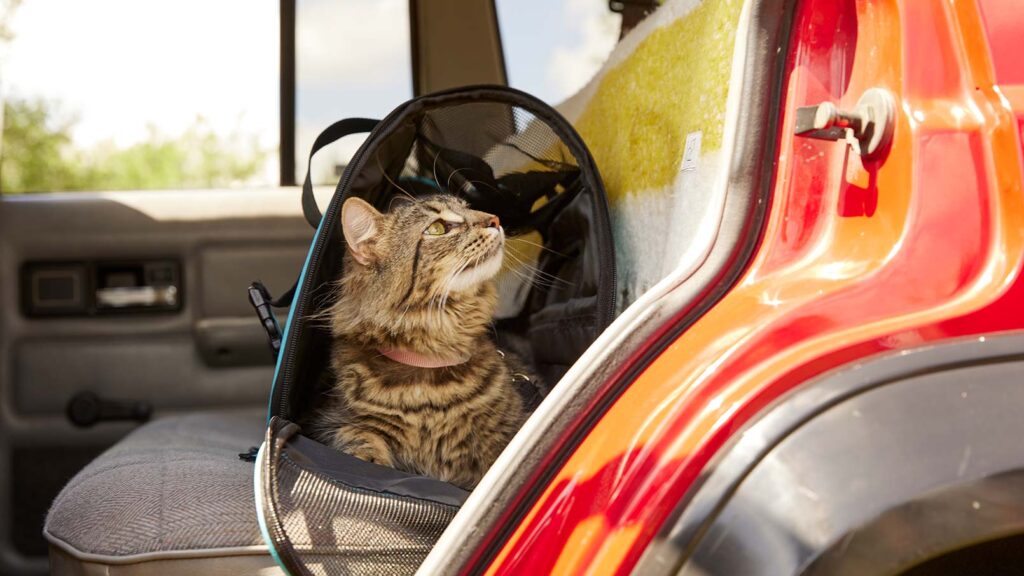
Photo by Chewy
Whether you’re planning a vacation, relocating to a new home, or heading out for the holidays, learning how to travel with a cat can make the trip safer and less stressful for both of you. While many cats prefer the comforts of home, plenty can travel successfully with the right preparation—from choosing the right cat carrier to helping them stay calm on the road or in the air.
Consider this your complete guide on how to travel with a cat—no matter where your adventure takes you.
Key Takeaways
- Traveling with a cat is safest and least stressful when you prepare ahead of time with a secure carrier, updated ID tags and microchip registration, and your cat’s medical records.
- Cats traveling by car, plane, or train should stay in a well-ventilated carrier lined with pee pads and familiar comfort items like blankets or toys.
- Flying with a cat requires advance planning, including checking airline pet policies, carrier size requirements, vaccination paperwork, and TSA procedures.
- Practice trips, carrier training, and a properly fitted harness and leash can help reduce travel stress and make cat travel safer and more comfortable.
Cat Travel Checklist
The ultimate cat travel packing list
The basics
- Medical/vaccine records
- Cat carrier
- Collar with updated ID tags
- Tracking device, such as an AirTag
- Food and water bowls/carriers
- Grooming wipes
- Cat food
- Treats
- Blanket
- Comfort toy
- Travel litter box and cat litter
- Anxiety medication or calming supplements (if prescribed by your veterinarian)
Car essentials
- Car seat cover
- Anti-nausea medication (if prescribed by your veterinarian)
- Cleaning supplies for accidents
Airplane essentials
- Health certificate or veterinary travel clearance (if required)
- Harness and leash for TSA screening
How To Prepare for Cat Travel
Traveling with a cat requires some pre-trip preparation. Whether traveling by plane, train, or automobile, here’s what you need to do.
1. Check in with Your Veterinarian
Speak with your veterinarian to make sure your cat is healthy enough to travel. Your vet can then ensure your pet is current on all their vaccines and that their microchip is updated and scannable. They can also prescribe anxiety medication or supplements if necessary.
Recommended Products



2. Pack Your Cat’s Medical Records
Keep your pet’s medical records on hand. This includes a full history of their vaccinations, a list of their current medications, and information on any diagnoses.
Having these records readily available can help if your cat needs veterinary care away from home, is boarding during your trip, or must meet airline or lodging requirements. You can carry printed copies or store them digitally on your smartphone for easy access.
3. Double–Check Their ID and Microchip
Your cat should be clearly labeled with personal information in case they escape or get lost in transit, says Carly Fox, DVM, senior veterinarian at the Schwarzman Animal Medical Center in New York City. She says this includes wearing a collar and/or tag with their name and your contact information, and updating their microchip registration with your most up-to-date information.
She also recommends putting a tracking device like an AirTag on them, so you can track their location in real time.
Recommended Products



4. Pack Their Food and Meds
Whether you’re driving, flying, or taking the train, it’s a good idea to bring extra food and medication in case of delays, detours, or unexpected changes to your plans. Keeping familiar food and treats on hand can also help provide comfort and maintain your cat’s routine while away from home.
If you’re flying, keep these essentials in your carry-on bag—not your checked luggage—so you can easily access them during travel and still have supplies if your baggage is delayed or lost.
For food, Dr. Fox recommends packing a lightweight, collapsible bowl—like the Frisco Travel Collapsible Silicone Dog & Cat Bowl—which also works for water. You may find that your cat isn’t interested in food when traveling, but still offer it to them just in case.
Recommended Product

5. Prep Their Carrier
During your travels, your cat must be secured in a comfortable pet carrier.
“A well-ventilated, secure carrier that’s large enough for your cat to turn around comfortably is ideal,” says Samantha Bell, cat behavior expert at Best Friends Animal Society in Los Angeles.
The Tavo Pets Dupree II Airline Carry-On Dog & Cat Car Seat is durable, comfortable, highly rated, and suitable for all kinds of travel. It’s one of Dr. Fox’s preferred options.
Recommended Product

“Line the carrier with several layers of pee pads in case of accidents, and bring essentials like treats, wipes, a small blanket, and a collapsible water bowl.”
A comfort toy from home can also help your cat feel more secure.
Recommended Products




6. Plan for Potty Time
For long days or multi-day journeys, Dr. Fox says your cat will require a travel litter box and cat litter. Check out the Pet Fit For Life Portable Cat Litter Box or Travel Cat The Porta-Pawty+ Covered Cat Travel Litter Box.
You can also use disposable litter boxes, like the Nature’s Miracle Disposable 2-in-1 Disposable Cat Litter Box & Liner.
Recommended Products
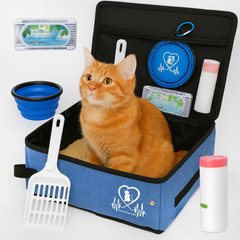
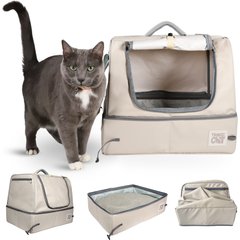

A lightweight litter that’s easy to travel with is ideal, or just bring a small amount of your cat’s go-to litter if they’re picky about their bathroom setup.
On shorter, single-day journeys, your cat may do best going in the carrier if necessary; many often hold it for a long time. If your cat does pee or poop in the carrier, remove the top pee pad and place it in a plastic bag before discarding it.
7. Help them Acclimate to a Carrier and Harness
Not all cats love their carrier, and that’s OK. If that’s the case with your feline, you can help acclimate them before your trip.
Bell says, “Leaving a carrier out year-round can help your cat see it as a safe, cozy space rather than something that only appears before a vet visit.”
You don’t need the whole year to prepare your cat, but it’s a good idea to start acclimating them to their carrier as early as possible—at least a few weeks before you leave. Put some treats and toys inside to make it feel like a happy space for them.
A cat harness and leash—like the Travel Cat The True Adventurer Reflective Cat & Kitten Harness & Leash—are also recommended, especially if you’re planning to make pit stops or are flying with a cat, since you’ll need to take them out of the carrier at TSA security checkpoints. You can have them practice wearing the harness beforehand, too.
8. Take Practice Trips
To help further acclimate them to their carrier and harness—and the idea of travel in general—take a couple of short trips leading up to your big getaway.
Bell says, “Practicing short trips ahead of time … can also reduce stress. A little preparation goes a long way in helping cats travel safely and comfortably.”
How to Travel with a Cat by Car
Hitting the road with your cat? Keep these tips in mind.
Managing Motion Sickness and Car Stress
Some cats get motion sickness from car rides, although this is more common in dogs.
Common signs include:
“If you are concerned your cat may develop motion sickness, be prepared with anti-nausea medications from your veterinarian, such as Cerenia,” Dr. Fox says. This medication is given one hour prior to travel and may help reduce signs of nausea.
Bell adds that offering a small meal before travel and keeping the carrier as stable as possible can also help with motion sickness.
Choosing, Outfitting, and Securing a Cat Travel Carrier
When traveling in a car with your cat, make sure to have a secure carrier that your cat is comfortable with. It should be outfitted with a soft base and comfort items from home, like a blanket or toy. Also, line it with a pee pad for easy cleanup.
“There are several different carrier options to choose from. I prefer the Sleepypod Mobile Pet Bed. The bed is crash-tested, comfortable, and has good ventilation,” Dr. Fox says. “You can also use your regular carrier and place it on the floor behind the front seat for security.”
Recommended Product

Tips for Pit Stops
Unlike dogs, cats do not require routine pit stops to do their business outdoors. They tend to hold their pee and poop until after the car ride.
If you have a ride longer than five hours, though, Dr. Fox recommends stopping along the way to give them a chance to use a travel or disposable litter box.
“Prepare your car with a small litter box that they can access during pit stops, ideally alone, within the confines of the car,” Dr. Fox advises.
Bell recommends providing food and water inside your car during pit stops as well. You can also offer them food and water within their carrier, ideally with the car not in motion.
Never Leave Your Cat Unattended
During your road trip, your cat should never be left alone in the car—not even if the windows are cracked open a bit. The temperature inside a vehicle can change rapidly, which can result in heat stroke or death in a matter of minutes.
How to Travel with a Cat by Plane
Traveling via car is one thing, but involving TSA and airline regulations is a whole new beast. Follow this expert advice on how to fly with a cat:
Is My Cat Allowed on the Plane?
Many airlines allow passengers to travel with a cat on a plane, but airline pet policies differ. Each has its own set of rules, regulations, fees, and booking requirements. Ask your airline directly about requirements to fly with your cat.
Cats do not qualify as service animals per the latest US Department of Transportation guidelines.
Required Paperwork
All pets, including cats, must travel with a human who has a booked ticket in advance, and many airlines limit the number of pets per flight. In other words, you can’t just show up with your kitty.
Beyond reservations, some airlines require proof of vaccinations, a health certificate and/or travel clearance note from your vet, and other medical forms.
“Airline requirements vary, so it’s best to check directly with your airline ahead of time,” Bell says.
Pet Fees
Every airline sets its own pet fee, so check in advance so there are no surprises. Pet fees typically range from $50 to $150 for domestic flights, with international flights sometimes costing more.
You may pay this in advance or on the day of travel, depending on the airline’s regulations.
Airline–Approved Cat Carrier
Your cat will need an airline-approved carrier that fits under the seat in front of you. Check with the airline regarding specific measurements, and whether a hard or soft shell is required.
Air Travel Safety for Cats
Follow these tips to keep your cats safe and secure while in the airport and on the airplane:
- Fly with your cat in-cabin rather than shipping them as cargo for both their overall health and their anxiety.
- Consider your cat’s breed. For example, brachycephalic breeds may be at risk for health issues, and some airlines won’t allow flat-face pets to fly. Check in with your vet and your airline prior to booking travel.
- Your cat will need a harness and leash, particularly during TSA security checks. They cannot go through the baggage x-ray machine inside the carrier and must be taken out. You can request a private room for this—allow for 15 to 20 minutes extra—or carry them throughout the process.
- Keep your cat in their carrier throughout all other parts of the airport and while on the plane (many airlines require this).
- Some airlines have strict rules regarding sedation and won’t allow fully sedated pets to travel, so check in advance before administering medications.
- Multiple layers of pee pads are recommended for your pet’s comfort. If they poop or pee, place the top pee pad in a plastic bag and discard it.
How to Travel with a Cat by Train or Other Transit
Traveling with a cat by boat, train, or bus isn’t much different from traveling with them in a car. They still need a comfortable and safe carrier, all their medications, updated identification, vet clearance, and necessary supplies.
The biggest difference is that you need to check in advance with the company regarding their fees, rules, and recommendations.
Cats on Trains
All train companies have their own rules regarding traveling with cats. The most popular domestic option is Amtrak, which allows cats.
For Amtrak, they must be in a carrier and the combined weight of the pet and its carrier must be 20 pounds or less. Also, note that pets are typically only allowed on train trips up to seven hours.
Cats on Buses
Again, each bus company has its own set of rules regarding whether pets are allowed. Greyhound, for example, only allows service dogs. Check in advance with the carrier to determine their rules and regulations.
Cats on Boats and Ships
Most major cruise companies do not allow pets on board, with the exception of the Cunard line’s Queen Mary 2.
Private boats and yachts each have their own set of rules, so contact the company or owner prior to booking for information. If you find yourself on a boat with your kitty, make sure they are wearing a life jacket.
Recommended Product

International Travel with Cats
International travel with cats can be much more challenging than domestic travel.
“International travel usually requires more planning, including health certificates, vaccination records, and sometimes microchips or import permits,” Bell says. “Requirements vary by country, so it’s important to research well in advance. Starting preparations a few months ahead can help avoid last-minute issues.”
You should also be prepared to meet the CDC requirements for re-entry into the United States when you return. Requirements vary depending on where you have traveled.
FAQs About How To Travel With a Cat
How long can cats travel in a car?
Cats benefit from a pit stop every four to six hours when road tripping. At this time, you can offer them water and food and allow them to use a travel litter box. They may be less inclined to use it, or to take food or water, but be sure to offer.
Can you fly with cats?
Yes, many airlines allow cats to travel. Each has its own set of rules, so check in advance regarding requirements, fees, and carrier specifications.
How do you travel long distance with a cat?
Whether by plane, car, train, or boat, cats require a comfortable, ventilated, secure pet carrier for long-distance travel. It should be lined with a pee pad (with a couple of backups so you can change them), along with updated identification, food, water, medications, and health documents.
Attributions