Bracco Italiano
Updated October 19, 2026

Bracco Italiano
Updated October 19, 2026
Goofy, fun-loving, and affectionate, the Bracco Italiano is an energetic hunter by nature and a calm family dog at heart. They need at least an hour of exercise a day, but once their activity requirements are met, they’re down to lounge and just keep you company.
Gentle, Energetic, Smart
55–90 pounds
21–27 inches
10–14 years
White, White and Orange, White and Brown
The Bracco Italiano was originally bred as a sporting dog. But regardless of whether you’re an avid outdoors person, you’ll need to spend at least an hour a day taking your Bracco out for exercise and play.
Once their mind and body have been adequately engaged, they’ll leave their high energy outside and become a docile, loving companion who will follow you from room to (bath)room. Other than exercise, caring for your Bracco is relatively easy—just be sure to keep their ears clean and keep them on a regular feeding schedule.
Bracco Italiano Characteristics
Bracco Italiano Appearance
Bracchi Italiani (the proper plural of the breed name) are handsome, muscular dogs with smooth, short coats. Their attentive eyes will look straight into yours—a sign of this breed’s friendly, outgoing nature.
They are often mistaken for hound dogs because of their floppy ears that hang past their large snout, but they’re actually part of the sporting group.
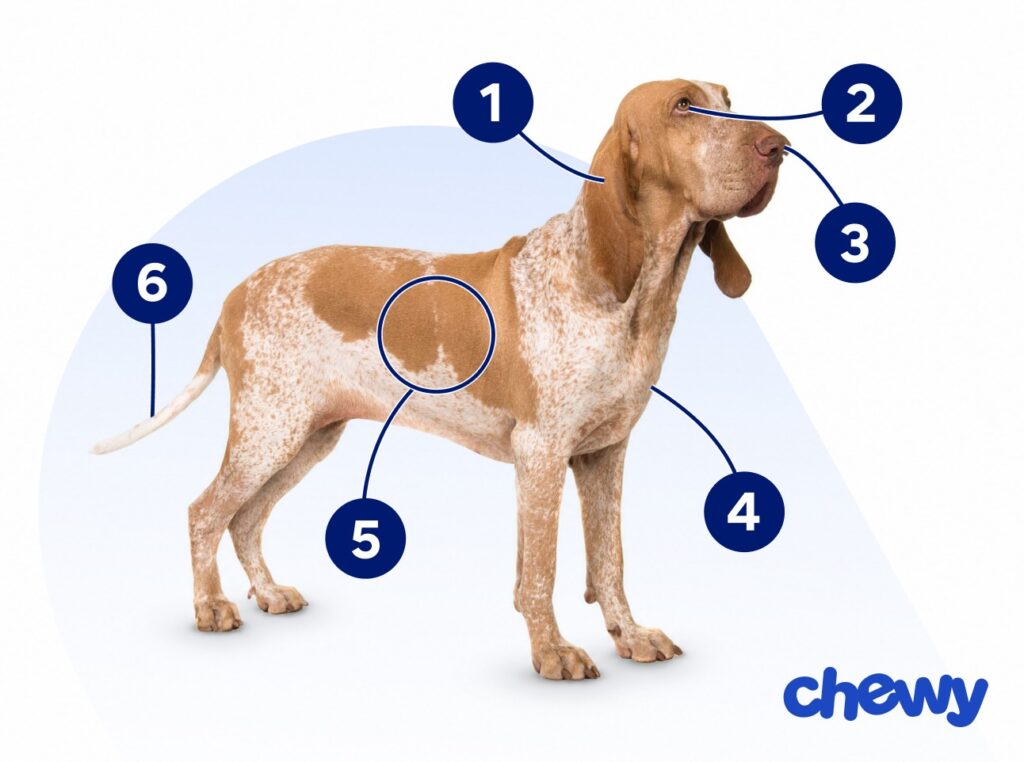
- Ears
Bracchi Italiani have long, drooping ears that often reach past the tip of their nose. Their ears are at least half as wide as they are long.
- Eyes
They have relatively large eyes that can be dark amber, orange, or brown, depending on their coat color. Their expressions are soft and thoughtful.
- Nose
Their large nose may be brown, pale pink, or a deep red.
- Coat Length
Their coat is short and smooth.
- Coat Color
They may have coats in all white, or white with orange or brown markings.
- Tail
Their tails are thicker at the base, and traditionally can be docked or undocked. However, docking is a controversial practice many veterinary organizations, including the American Veterinary Medical Association, oppose. When in action, the Bracco carries their tail horizontally.
Bracco Italiano Temperament
With their fun-loving, outgoing personality, the Bracco Italiano makes an excellent dog for families and individuals alike. They tend to do well with kids of all ages (although monitoring their interactions is still important), and are typically gentle and warm toward other animals.
But, like a true sporting dog, Bracchi Italiani are hardworking when it’s called for.
“A well-bred Bracco is typically calm, sweet-natured, friendly, and confident at home but serious, determined and driven in the field,” says Valerie Kessler, secretary of the Bracco Italiano Health Foundation, member of the Bracco Italiano Club of America, and co-owner of Riverbend Braccos and Labs.
The Bracco Italiano breed is a pointer dog whose name translates to “Italian pointer.” Many pet parents choose this breed as their hunting companion, and admire their energy and agility. But when it’s time to go home, these dogs’ calm, affectionate nature comes out.
“They have an on-and-off switch,” says Kristi Libertore, an award-winning Bracco Italiano breeder and co-owner of Whiskey Hills Bracco Italiano. “They’re kind of a silly, goofy breed—just a fun personality as a dog—but also a dog that you can go bird hunting with.”
Not every Bracco Italiano needs to hunt to live a happy life, but they do need regular exercise to get their energy out. As long as they get enough activity, this breed can be a loyal, laid-back family pet.
Related Breeds





How to Care for a Bracco Italiano
The Bracco Italiano is an easygoing companion as long as their exercise needs are met. They require basic grooming and a little extra ear care.
It’s the activity level that pet parents will need to be most aware of. Without an hour of stimulating exercise a day, these dogs can pick up destructive behaviors like barking or chewing.
Grooming
Training
Diet
Exercise
Environment
Bracco Italiano Health
Bracchi Italiani are generally healthy dogs with a lifespan of 10–12 years. However, as with any breed, there are some health concerns to be aware of. Here’s what to look for in a Bracco.
- Kidney disease: The Bracco Italiano breed is prone to kidney disease, which results in the kidneys being unable to adequately filter waste from the blood. Symptoms of kidney disease include excessive thirst and frequent urination. Some types of kidney disease are hereditary in dogs. Regular blood and urine tests can catch it early on.
- Bloat: Large breeds such as the Bracco are at risk of developing bloat—also known as gastric dilatation-volvulus (GDV). This is a life-threatening condition where the stomach fills with gas and food, then twists on itself, cutting off blood flow in the process. Symptoms include restlessness or pacing; a swollen, hard belly; excessive drooling; or dry heaving. If you notice symptoms of bloat in your Bracco, contact your vet immediately.
- Hip dysplasia and elbow dysplasia: These genetic conditions occur when the hip or elbow joints don’t fit together properly. Signs of hip or elbow dysplasia can include limping or stiffness. “It’s important to [work with] a breeder who health tests for hip dysplasia and elbow dysplasia,” Kessler says. If your Bracco develops either of these conditions, your vet may suggest treatments including weight management, anti-inflammatory medications, or surgery for severe cases.
- Ear infections: The Bracco’s large, floppy ears make them a likely candidate for ear infections. Check regularly for signs of infection—which may include odor, redness, or ear scratching—and talk to your vet about developing a safe ear-cleaning routine.
- Eye conditions: Bracco Italiano dogs can develop eye conditions, including cataracts, which cause the eye to turn a cloudy white color. Cataracts can impair their vision and may even lead to blindness. Entropion (eyelids that roll inward) and ectropion (eyelids that roll outward) are also possible. If you notice a cloudiness in your dog’s eye, or any other changes to your dog’s eyes or vision, contact your vet for an eye exam.
This is not a complete list of all of the health problems that Bracchi Italiani can develop. Staying on top of wellness care is vital.
Bracco Italiano History
Although the Bracco Italiano breed is quite new to the U.S., their history dates back all the way to the fourth or fifth century BCE.
“The breed was very popular with Italian nobility, and they were deeply prized for tracking and retrieving game birds,” Kessler says.
There were originally two variations of the Bracco: The Piedmont variety had a white and orange coat, and the Lombardy variety was roan and brown.
During the 1800s, the Bracco breed became increasingly less common and even faced extinction. Diligent, committed breeders brought the breed back to a healthy status, and in the 1920s began crossing the Piedmont and Lombardy varieties for better genetic diversity.
Today, the Bracco Italiano is treasured as a hardworking pointer dog with an affectionate family side, although many people still hunt with their Bracco. In 2022, the American Kennel Club (AKC) first recognized the breed, and since then the Bracco has become a prized show dog while maintaining their reputation as an agile sporting dog.