Karelian Bear Dog
Updated October 23, 2026
Karelian Bear Dog
Updated October 23, 2026
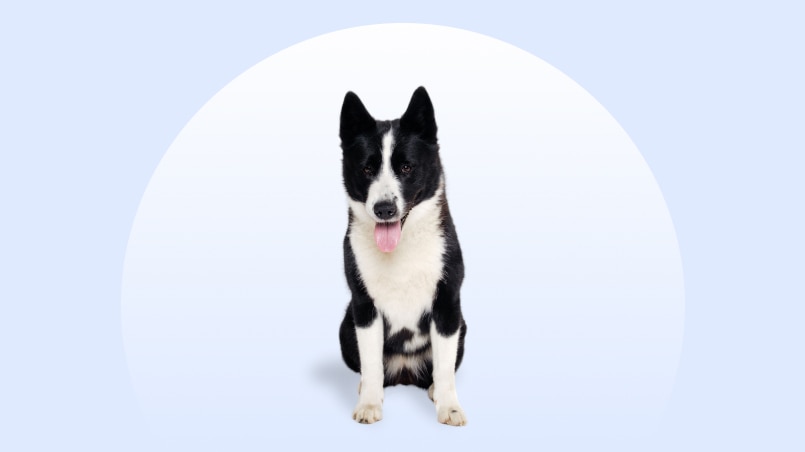
The Karelian Bear Dog isn’t especially outstanding in size, but these black-and-white working dogs have major intelligence, drive, and stamina for outdoor jobs. Only experienced pet parents looking for an active canine partner need apply.
Courageous, Reserved, Independent
44–49 pounds
19–23.5 inches
11–13 years
Black (with or without white markings)
Ready to leave for an adventure? The Karelian Bear Dog is one step ahead of you. These smart and independent working dogs thrive in outdoor environments and will never say no to a chance to hunt, track, or hike with you.
Karelian Bear Dogs know no fear, which is an asset when they’re tracking and holding large game like a bear or a moose for the hunter. But that high prey drive and focus on work also mean they tend not to prefer being the only pup around, so you’ll likely be skipping the dog park in favor of wide-open spaces.
Karelian Bear Dog Characteristics
Karelian Bear Dog Appearance
Karelians have a sturdy build that emphasizes the breed’s strength and stamina. These medium-sized dogs have characteristic spitz features, including upright, pricked ears; a bushy tail that curls over the back; and a dense, double coat of fur.
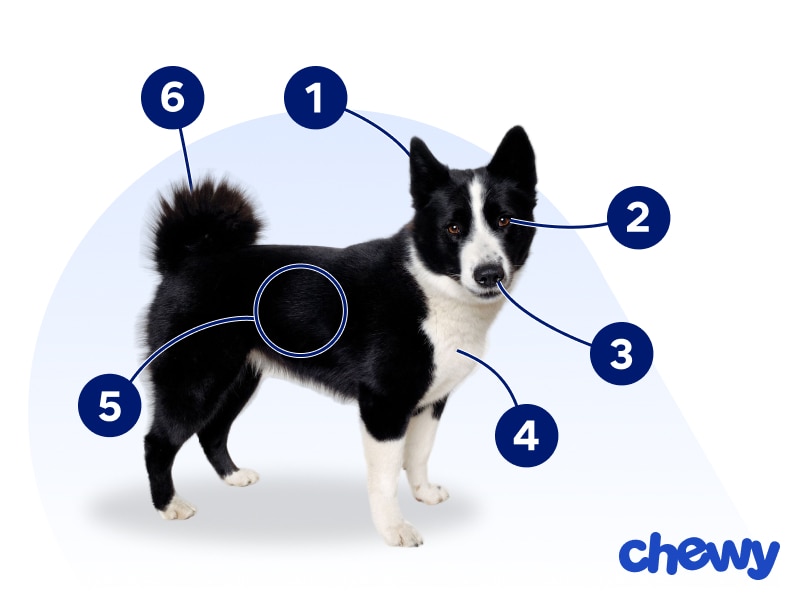
- Ears
These dogs have medium, erect ears set high on the head. The ears are triangular in shape with rounded tips.
- Eyes
The small, oval eyes of this breed are brown and convey the dog’s alert, aware nature.
- Nose
The square muzzle ends in a large, black nose.
- Coat Length
Karelian Bear Dogs have a medium-length double coat. The undercoat is thick and dense to insulate against the elements, and the outer coat is straight and coarse. The coat is longer around the dog’s neck, and along the back and hindquarters.
- Coat Color
Their black coat is almost always accented with white markings. It’s possible but rare for the coat to be solid black. While black is the only official color in the breed standard, the coat can also have brown undertones.
- Tail
A medium-long bushy tail is typical for the breed, and it curves over the back. A natural, shorter bobtail is also possible but uncommon.
Karelian Bear Dog Temperament
A Karelian Bear Dog has a strong, tenacious demeanor. These dogs are independent thinkers who aren’t easily intimidated by a challenge—yes, even if that challenge is a bear.
“They earned their name because they are one of the exceptionally rare breeds with the sheer grit, courage, and relentless drive to bay a massive Eurasian Brown Bear solo for hours on end until the hunter arrives,” says Josh Troops, who owns Snowy Mountain Bear Dogs with his wife, Faith.
That tenacity means these working dogs need a job; they’re not content to lounge around like a Basset Hound. A Karelian Bear Dog needs consistent, meaningful work. Most often, they’re used as hunting and tracking dogs for large game, but they also have a reputation as outstanding partners for human-wildlife mitigation programs.
Pet parents should be prepared to forge a partnership with a strong-willed, thinking dog. “They aren’t difficult because they are unintelligent or unwilling to learn—they are difficult because they are smart enough to have their own opinions,” says veterinary technician Susan Haus, a Karelian Bear Dog pet parent and breeder at Karelian Haus.
Karelian Bear Dogs are quite alert and tend to be aloof toward strangers. But with the people they know and trust, these dogs are loyal and affectionate.
Related Breeds


How to Care for a Karelian Bear Dog
A Karelian Bear Dog needs your daily commitment to exercise, consistent training, and the ability to put up with some shedding—especially during seasonal changes. When these dogs receive abundant outdoor exercise and have purposeful work to do, they are devoted partners and companions.
Grooming
Training
Diet
Exercise
Environment
Karelian Bear Dog Health
Karelian Bear Dogs are a hardy breed without a long list of health concerns, but they can be predisposed to certain inherited conditions. Health and genetic testing from a responsible breeder can identify affected dogs and carriers. Conditions to be aware of include:
- Progressive rod-cone degeneration (PRCD): This inherited form of progressive retinal atrophy (PRA) causes the retina to gradually deteriorate, typically when a dog is 3–9 years old. Night vision is affected first, followed by gradual daytime vision loss and eventual blindness. There is no cure, but genetic testing can identify carriers, and blind dogs can still live long, happy lives with proper care.
- Cataracts: A cataract is a cloudy lens that can cause vision loss. Karelian Bear Dogs can develop cataracts at a young age, and dogs with a family history of the condition should not be bred. Cataracts can be surgically removed to restore eyesight.
- Hip dysplasia: Hip dysplasia is an inherited condition in which the hip joint does not align properly, leading to pain and arthritis. Signs can include limping, difficulty rising, a bunny-hopping gait, reluctance to run or climb stairs, and holding an affected leg out to the side. Treatment may include joint supplements, medication, physical therapy, and/or surgery.
- Pituitary dwarfism: Pituitary dwarfism is a rare inherited disorder caused by improper functioning of the pituitary gland. It can lead to stunted growth, a retained puppy coat, delayed teething, hair loss, skin changes, reproductive abnormalities, heart murmurs, and kidney disease. There is no cure, but the condition can be managed with hormone replacement therapy. Breeding dogs should be genetically screened for the responsible gene.
- Chondrodysplasia (CDPA): Chondrodysplasia is an inherited skeletal disorder that causes disproportionately short legs. Affected dogs may develop limb deformities, joint instability, pain, and early-onset arthritis. Mild cases may not require treatment, while severe cases may be managed with joint supplements, medication, or surgery. Genetic testing can identify carriers.
- Hypophosphatasia: Hypophosphatasia is a severe inherited metabolic disorder that interferes with normal bone hardening. It can cause abnormal or stunted growth, mobility problems, and seizures. There is no treatment, and affected puppies are often humanely euthanized soon after symptoms develop. Breeding dogs should always be tested for the mutation that causes this condition.
As with any dog breed, an active lifestyle, proper nutrition, and routine veterinary care are important factors for ensuring a long, healthy life. For a Karelian Bear Dog, the average lifespan is 11–13 years.
Karelian Bear Dog History
The Karelian Bear Dog is a primitive, Spitz-type breed whose ancestral stock came from areas that are now in Russia—but the modern breed was deliberately developed, standardized, and first registered in Finland. The dogs get their name from the Karelia region of northeastern Europe but have built a reputation as brave big game hunters throughout Nordic countries.
According to the American Karelian Bear Dog Alliance, these dogs were nearly wiped out during World War II. After the conflict, surviving dogs were selectively bred; a breed standard was established in 1945. From there, the numbers have grown and these dogs have become increasingly well-known as courageous hunting partners.
The historical relationship between Karelian Bear Dogs and Finnish hunters is quite different from modern pet parenthood: “Within the last 100 years, Karelians in Finnish villages were expected to survive completely on their own during the spring and summer months, finding their own food and shelter,” says Troops. “Handlers only provided resources during the fall hunting season and harsh winters.” As a result, the spirit of self-reliance and independence runs deep in the breed.
Since 2005, the Karelian Bear Dog has been part of the AKC’s Foundation Stock Service, but it has not yet received full breed recognition.