How To Go Hiking With a Cat


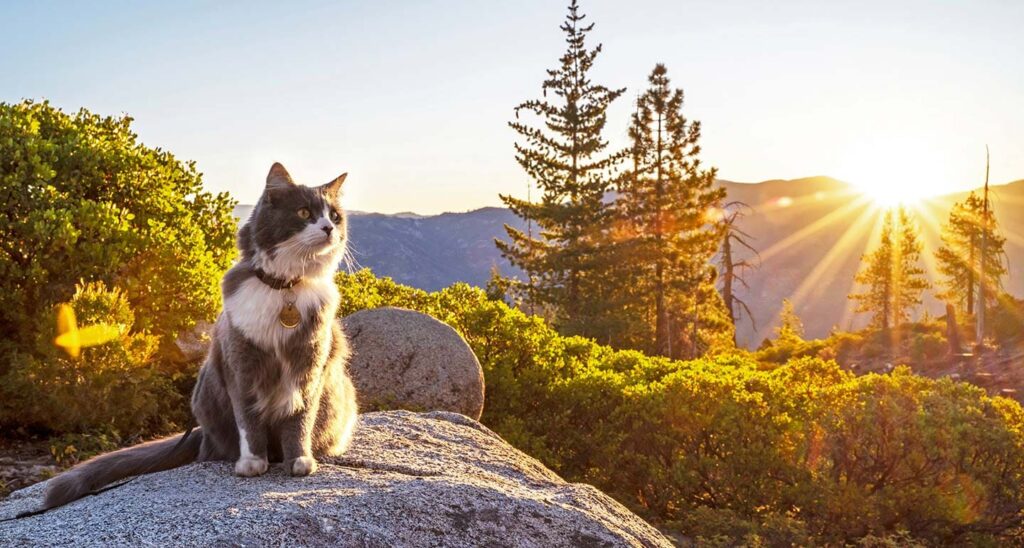
Photo by Courtesy of @adventurrio
Imagine exploring a tree-lined trail through the woods, communing with nature beside a fresh forest stream, reaching the top of a hiking path and looking out across a spectacular mountain vista—all with a cat at your side.
Wait, what? A cat?
That’s right: A growing number of cat parents are exploring the great outdoors alongside their favorite furry felines, including Maria Roper and her cat Rio (of @adventurrio); Candace Stroh and her cat Olive (of @olive_the_adventurous); and Jessie Russell and her cat Milo (of @miloandmoki).
Many cats have a natural inclination for wandering in the wild, these pet parents agree—it just takes training, the right gear and some patience.
So, are you ready to tell your cat to take a hike (with you, of course)? Follow their tips for hiking with cats to get started.
Key Takeaways
- Many cats enjoy outdoor adventures with their humans—but leash training and the right gear are essential first steps.
- A secure harness, a 6-foot leash, and a backpack carrier can help keep your cat safe and comfortable on the trail.
- Leash training should be slow, positive, and stress-free to set your cat up for success.
- Don’t forget hiking basics: a pet first aid kit, water bowl, and treats are must-haves for any feline-friendly hike.
Essential Cat Hiking Gear
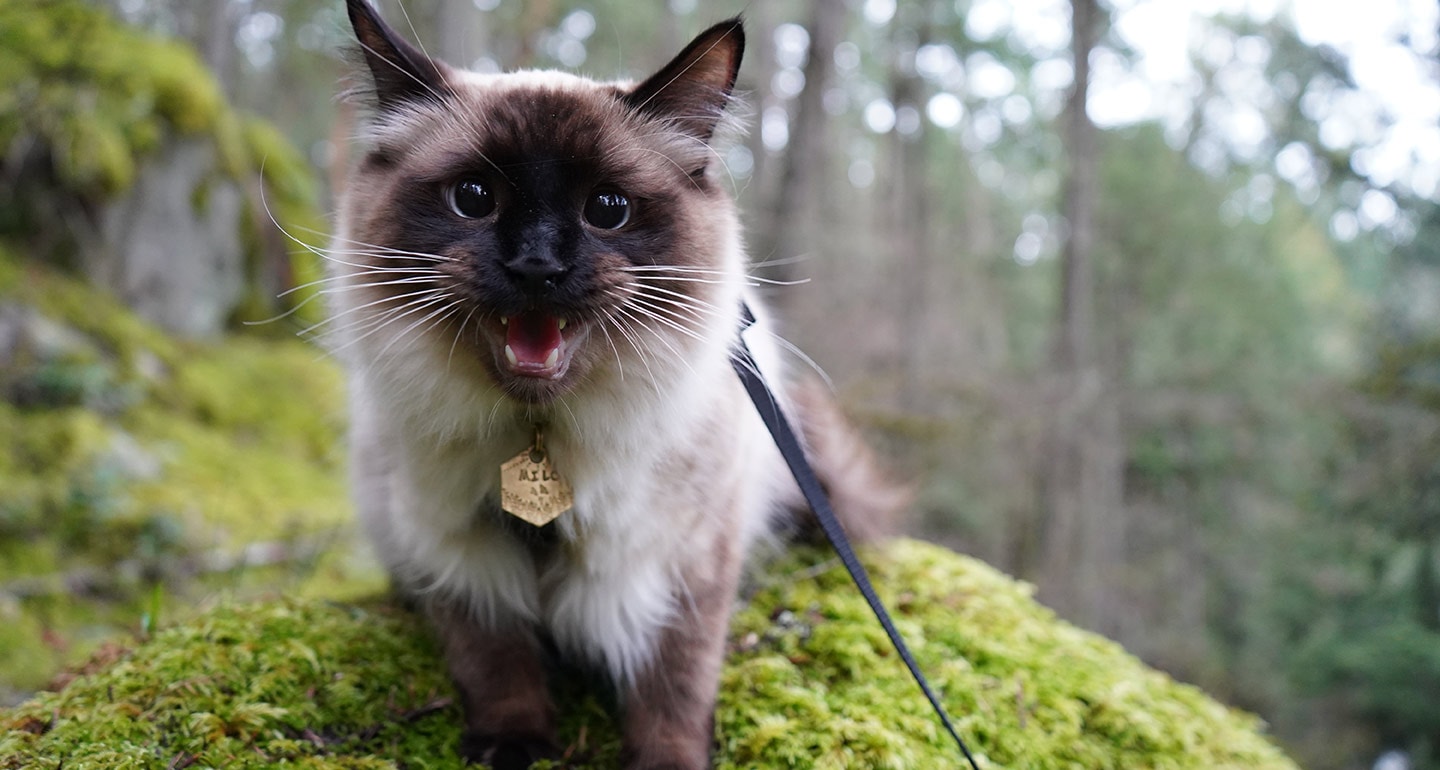
Courtesy of @miloandmoki
Each of our experts agrees that there are several cat hiking gear essentials you need to keep your cat safe and secure in the wild.
1. A Cat Harness
Make sure your cat’s harness fits securely, to prevent your cat from slipping out. Russell suggests an H-style harness, such as the PetSafe Come With Me Kitty Harness, for training.
Recommended Product
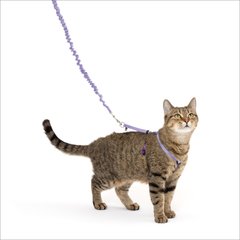
But if your cat is like her Milo, often pulling at the leash to get to the next exciting tree or flower, consider switching to a harness with coverage across the chest.
“I don’t want all that pressure going on his neck,” she explains. “It works better to have a harness with a sort of chest plate on the front.”
Recommended Product

2. A Cat Leash
For your first cat leash, choose a length of 6 feet, Russell suggests. When you’re both comfortable on the trail, you can level up to a longer leash that gives your cat more freedom.
Recommended Product

Many harnesses come with a matching leash.
Recommended Product

It’s a good idea to carry an extra set. “That way, if one breaks, we can still enjoy the rest of our journey without Milo having to stay secured in his backpack,” Russell says.
Leash Training Your Cat
We’ve all seen those videos: Somebody will put a harness on their cat, and the cat flops over and refuses to move.
“That’s a freeze response,” says Dr. Marci L. Koski, a certified feline behavior and training consultant at Feline Behavior Solutions in Vancouver, Washington. “That cat is basically terrified.”
Cats aren’t inclined to accept a leash and harness right away. But with the right steps, you can leash train your cat for the trail the right way:
- Pair the harness with positive reinforcement. This means rewarding your cat with anything they like, from treats and petting to brushing and praise, when they show an interest in their leash and harness.
- Go slow. Take small steps. Leave the harness out in places your cat likes to hang out around the house, and leave treats near it. Once they’re familiar with the harness, hold it up and put some treats where the head would go, so that your cat gets used to putting their face in the middle of the harness.
- Don’t force it. Watch your cat’s body language for signs of stress, and if you see any, end the training session and try again later.
3. A Cat Backpack
Just like children, cats get tired, and sometimes they might need a lift from you on your hiking adventure. You may also want to carry your cat if you’re trying to get from Point A to Point B in a specific time frame. (Remember what we said above about cats doing things on their own schedule?)
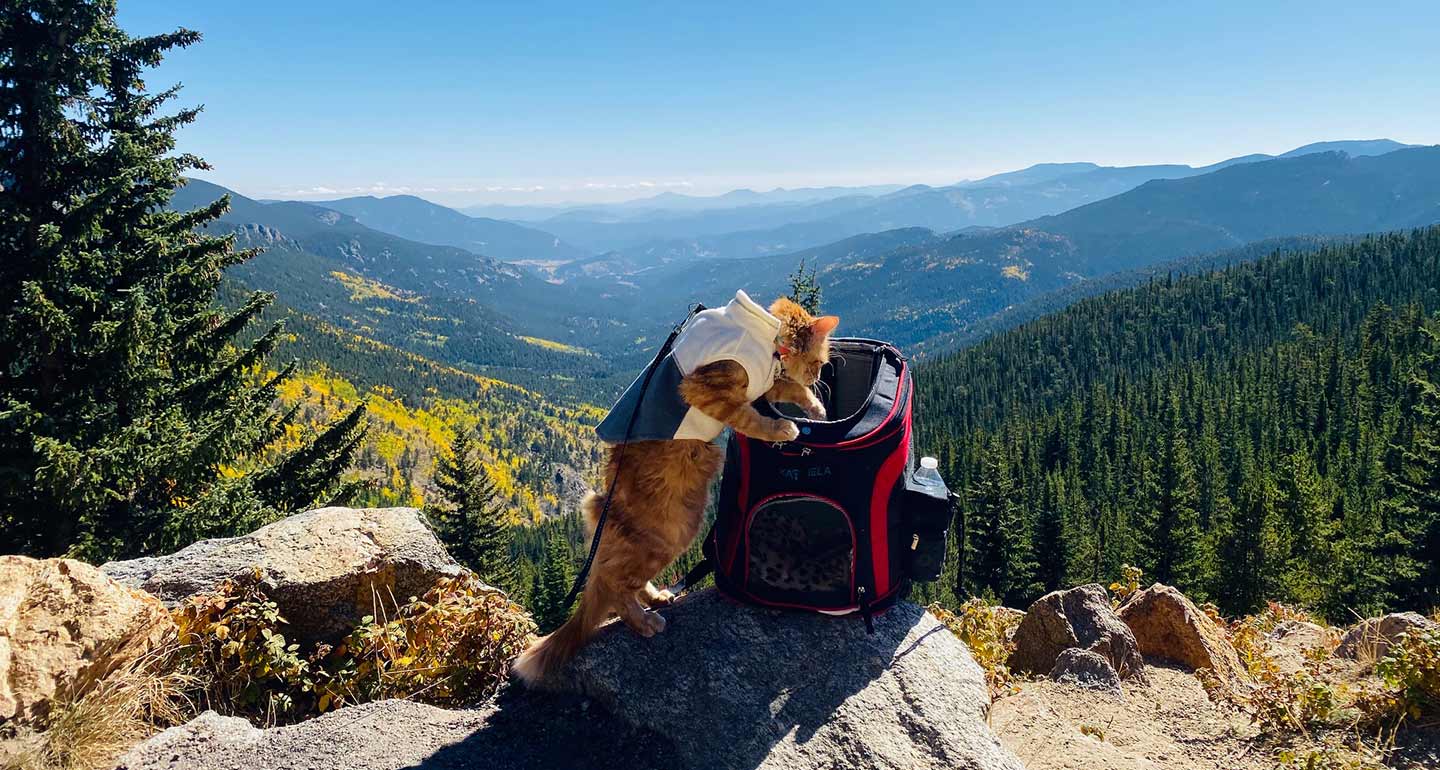
You certainly can carry your cat in your arms, or allow them to perch on your shoulders if they’re inclined to do so. Another good alternative is to use a cat backpack carrier.
Recommended Products
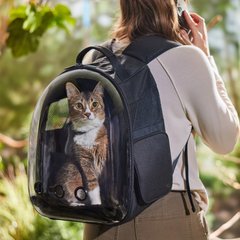

If your cat’s not used to being carried inside a carrier, get them used to it in advance, using a slow and steady process similar to leash training.
“Again, it’s all about pairing that backpack with good things and gradually acclimating your cat to using and being outside in that backpack or stroller,” says Koski.
Carrying things like favorite blankets or toys that already have your cat’s scent on them can help put them at ease in the carrier, too.
The best cat backpacks have these qualities:
- One that’s big enough to allow your cat to lie down comfortably, but not so big that they can slide around (cats are generally more comfortable in smaller carriers)
- One that has a clasp or loop to which you can tether your cat’s leash (which should remain attached to your cat during your whole hiking adventure)
- An opening or window through which your cat can look out
- Extra pockets for other hiking gear
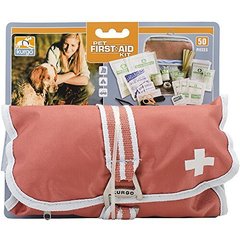
4. Cat First Aid Kit
Carrying a pet first aid kit ensures you’re prepared for minor injuries or emergencies while on the trail. Look for one that includes essentials like gauze, antiseptic wipes, and tweezers.
Recommended Product
5. Cat Treats
Bringing treats on your hike serves two purposes: rewarding good behavior and providing an energy boost during longer treks. Choose high-value treats your cat loves to keep them motivated.
Recommended Product

6. Cat Water Bowl
A travel-friendly water bowl makes it easy to keep your cat hydrated throughout the hike.
11 Tips for Hiking With a Cat
Courtesy of @olive_the_adventurous
1. Respect Your Cat
The first rule of Adventure Cat Club? Don’t force it.
Not all cats’ personalities are well-suited to hiking and other outdoor activities, Stroh says. “Cats have different personalities,” she points out. “Some cats don’t want to go outside. It would be horrible to force your cat outside just because you think it looks cool.”
Many cats are skittish about new experiences, Russell adds, so don’t be discouraged if they’re disinterested or avoidant at first. If you slowly acclimate your cat to the great outdoors (more on how to do that below), there’s a decent chance you have a hiking cat in your future.
“But if your cat doesn’t respond well to that,” Russell says, “then obviously that’s something you shouldn’t do.”
Even after cats get comfortable on the trail, sometimes they’re simply not in the mood for an outdoor trek. (Adventure cats are still cats, after all.)
“I always ask myself, what’s Olive’s mood for the day?” Stroh says. “Is she going to like going hiking today? If she’s not going to like it, then I’m not going to force it.”
2. Take Safety Precautions
Hiking with cats can be fun, but it also comes with risks. Follow these safety tips:
- Ensure your cat’s vaccines and microchip registration are up to date.
- Make sure your cat’s flea, tick and heartworm preventatives are up to date, too, as going outdoors puts them at greater risk to pests.
- Make sure they’re wearing ID tags with current info.
- Carry a pet first aid kit that includes gauze, tweezers, small scissors, and disinfectant.
- Bring food and water.
3. Start Hiking While Your Cat’s Young
Kittens and young cats are naturally more curious and adaptable, making early socialization a great opportunity to introduce them to hiking.
Begin with short outdoor sessions in a safe, enclosed space, and slowly progress to longer outings. If your cat gets used to wearing a harness and exploring early in life, they’re more likely to enjoy full-on trail adventures as adults.
4. Carry Your Cat Through Your Door
When it’s finally time to venture outside, it might seem intuitive to leash up your cat and stroll out the front door together—but that’s a big mistake, Russell says.
“I never let him walk out of the house on his own,” she says, “even if he is wearing a harness and a leash.” If your cat feels comfortable walking out the doors of your home, she points out, they might try to do it at inopportune times, like when you’regreeting a visitor or bringing groceries inside.
“I always carry him out or have him in his backpack,” Russell says, “so he doesn’t door-dash whenever we open the door.”
5. Start at Home
Just as you eased your cat into wearing a harness, you’ll also have to move slowly while acclimating them to exploring nature. That means your first trip into the wild should be somewhere very close to home—like your own backyard.
Carry your cat outside and set them down in a safe area. Then, follow their lead. Watch for signs of stress in your cat’s body language, such as tail thumping and dilated pupils, and bring them back inside if they seem overwhelmed.
On the other hand, if they seem curious and confident, it’s time to hit the trail.
6. Don’t Forget Car Training
If you don’t live within walking distance of the epic hikes you plan to take with your cat, then adventuring is going to involve at least a little bit of driving—and you don’t want that travel to stress your cat out before you’ve even taken one step on the trail.
There’s only one way to get your cat comfortable with the car: exposure. Just like with harness training, the key is to start slow, and gradually increase the length of your car rides over time.
For longer trips, cats can ride in a crate securely strapped into your car’s seats.
Recommended Product

Remember to provide food, water, and even a disposable litter box for them to use on the trip.
Recommended Product


Courtesy of @adventurrio
7. Choose a Peaceful Trail
Not every trail is an ideal match for your cat, so you’ll want to do some research to find the perfect pick.
Avoid areas that are often crowded, Roper advises. Many cats prefer not to be around a bunch of people, especially in a new environment.
Trails that require dogs to be on leash are a safer bet too, Russell adds. That way, any dogs your cat encounters will be guided by a human hiker—who can restrain their dog if they try to chase your cat.
Finally, pick a trail that gives your cat a clear path to follow.
“When you’re training them, cats prefer to follow narrow trails,” Roper says. “It’s easier to walk on a narrow trail than a very wide path or a field. And that’s something that can teach a cat to walk forward with you.”
8. Let Your Cat Explore
If you’re used to hiking with dogs, be prepared: hiking with your cat is going to be a very different experience.
Cats generally like to move slowly and explore their surroundings, rather than walking alongside you like many dogs are trained to do.
If your cat starts wandering in a direction that you don’t want them to, avoid yanking on their leash to steer them back to the trail. Instead, just stop walking and hold the leash tight.
When your cat gets to the end of the leash, they’ll likely take a look around, and then look back at you to see what’s next.
In the meantime, take a deep breath, relax, and move at your cat’s pace. Hey, appreciating nature is what it’s all about, right?
9. Watch Your Cat’s Cues
The outdoors can be a beautiful and exciting place to explore, but it can also pose risks to your cat. Wild animals and other hikers’ pets are just a few potential threats you need to be ready to encounter.
“One thing I’ve learned is that some people don’t follow the rules,” Stroh says. She and Olive have encountered free-roaming pet dogs on trails with explicit leash requirements, for instance.
Often, your cat will hear a threat approaching before you do. So, if you notice them displaying stress signals, pick them up and tuck them safely into your backpack. That will keep them out of harm’s way if a dog or other potentially dangerous entity appears on the trail.
10. Mind the Heat
Cats are sensitive to high temperatures, so it’s up to you to make sure they stay cool and comfortable while you explore.
Make sure you have water for your cat and a travel-friendly pet bowl for them to drink from. Plan to stop and relax in the shade anytime you notice signs of overheating or dehydration.
Signs of overheating in cats include:
- Excessive and constant panting
- A wobbly walk
- Lethargy
- Rapid heartbeat/increased heart rate
11. Relax, Enjoy, and Bond With Your Cat
Together, you and your cat have worked hard to embark on a new adventure together. Now’s the time to reap the rewards—and not just by taking Instagram-perfect pictures.
Each of our cat-hiking experts told us that bringing their pets on the trail inspires them to walk with intention, to take each step at their pets’ pace, and appreciate the beauty around them in a new way.
“Hiking with Milo adds another element that makes you slow down, take things in and enjoy the moment,” Russell says.
“There are so many moments that we walk by every day and don’t take any notice of, but being out there with them gives me a different perspective. It’s definitely mutually beneficial!”
Attributions