Petit Basset Griffon Vendéen
Updated October 21, 2026
Petit Basset Griffon Vendéen
Updated October 21, 2026
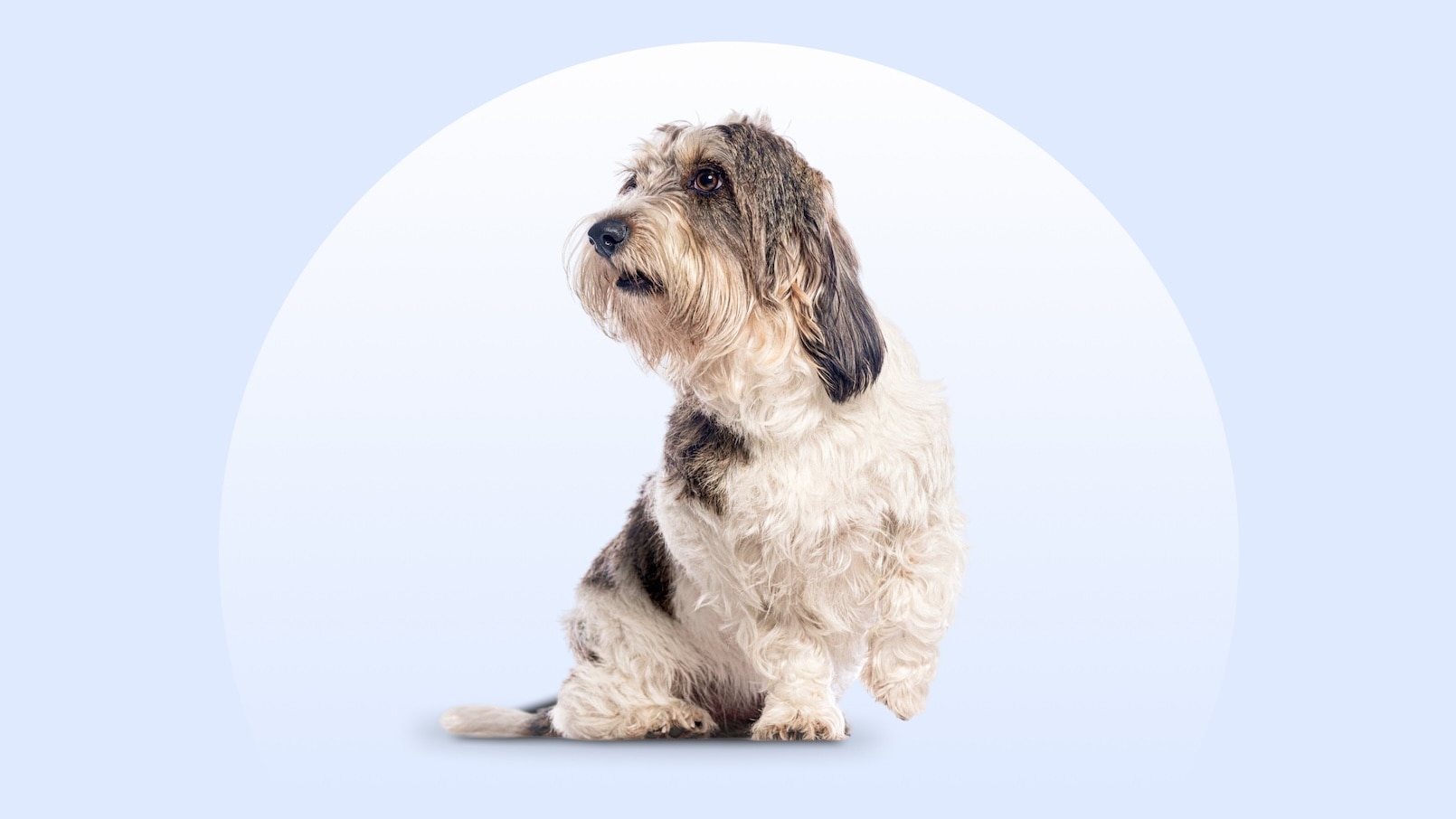
Petit Basset Griffon Vendéen are cheerful, curious dogs who like to stay busy and involved in family life. Bred to hunt rabbits, these lively hounds need regular exercise, engaging training, and pet parents who appreciate their independent nature and tendency to follow their noses.
Friendly, Playful, Independent
25–40 pounds
13–15 inches
14–16 years
White and Grizzle; White and Lemon; White and Orange; White and Sable; White, Black, and Tan; White and Black; White and Gray
Living with a Petit Basset Griffon Vendéen means having a curious sidekick who likes to know what’s going on—and usually wants in on the action. These small hounds tend to be happy, playful and outgoing, and they bring plenty of enthusiasm to everyday life.
Originally bred to hunt rabbits through the rugged countryside of western France, PBGVs are energetic dogs who aren’t afraid to think for themselves. They do best with families who enjoy staying active and appreciate a dog with a lively personality and independent point of view.
Petit Basset Griffon Vendéen Characteristics
Petit Basset Griffon Vendéen Appearance
Petit Basset Griffon Vendéen are small, sturdy hounds with a shaggy, slightly tousled appearance. Their bodies are somewhat longer than they are tall, with short legs built for navigating rough terrain.
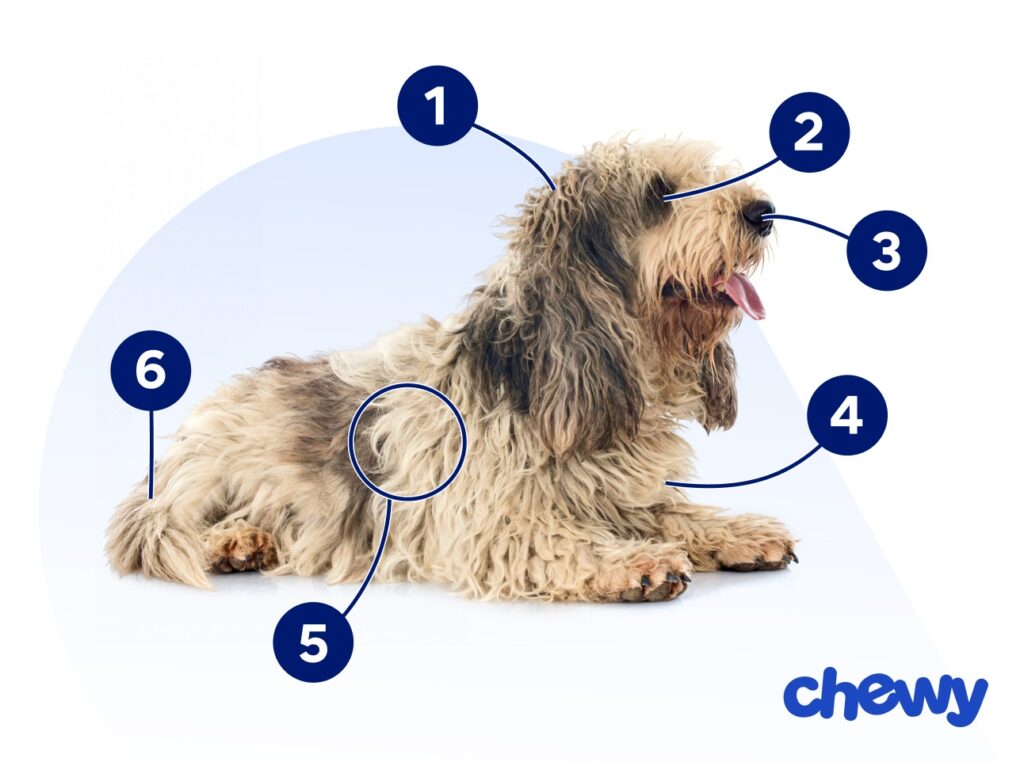
Long ears; bushy eyebrows; a beard and mustache; and a proud, curved tail give PBGVs their distinctive look.
- Ears
PBGVs have long, narrow ears that fold inward, are covered in hair, and hang close to the head. The ends are slightly rounded and reach almost to the nose when extended forward.
- Eyes
Their large, dark eyes have an alert, expressive look. Long eyebrows frame the eyes but shouldn't obstruct them.
- Nose
The nose is large with wide nostrils and is typically black, though it may be brown in dogs with orange-and-white coats.
- Coat Length
PBGVs have a rough, medium-length double coat, with a thick, shorter undercoat beneath the harsher outer hair. Their naturally tousled coat shouldn't look overly trimmed or sculpted.
- Coat Color
Their coat is white with markings that may be lemon, orange, black, sable, tricolor, or grizzle.
- Tail
The tail is medium-length, strong at the base, and gradually tapers toward the tip. PBGVs typically carry it upright in a gentle curve when alert or moving.
Petit Basset Griffon Vendéen Temperament
A Petit Basset Griffon Vendéen dog tends to approach life with enthusiasm. They’re friendly, affectionate dogs who enjoy being part of family life and greet new people with curiosity rather than hesitation. Their playful side often sticks around well beyond puppyhood, so expect a companion who’s usually ready to join whatever is going on.
PBGVs were bred to hunt in groups, and many enjoy the company of other dogs. They can also live successfully with children, as long as kids know how to interact respectfully with dogs.
Smaller pets require more consideration—PBGVs are scent hounds with a strong instinct to chase after small creatures, so early socialization with cats and other household animals is ideal. Introduce them carefully and monitor their interactions appropriately.
That hunting background also helps explain the breed’s independent streak. PBGVs were expected to follow scent trails through dense terrain without constant direction from a handler, and modern Petit Basset Griffon Vendéen still like to make some decisions for themselves.
Related Breeds



How to Care for a Petit Basset Griffon Vendéen
Caring for a Petit Basset Griffon Vendéen means keeping up with both their shaggy coat and active nature. These sturdy little hounds need regular grooming, daily exercise, and consistent training to thrive.
Their long ears need some extra attention, too, particularly after outdoor adventures.
Grooming
Training
Diet
Exercise
Environment
Petit Basset Griffon Vendéen Health
Petit Basset Griffon Vendéen are generally considered a healthy breed with an average lifespan of 14–16 years. Still, there are a few conditions prospective pet parents should know about. The PBGV Club of America recommends eye exams and DNA testing for primary open-angle glaucoma (POAG) for breeding dogs, with hip evaluations listed as optional.
Some health concerns seen in PBGVs include:
- Primary open-angle glaucoma (POAG): This inherited eye disease causes pressure inside the eye to increase, which can damage the optic nerve and other parts of the eye and lead to vision loss. POAG can also be very painful. A DNA test can identify dogs who are clear, carriers, or genetically affected, making testing particularly important for breeders.
- Other eye abnormalities: Additional eye problems, including strands of tissue that remain across the pupil after birth and abnormal folds in the retina, have been reported in PBGVs. Regular eye exams can help catch these and other issues, and the breed club recommends eye exams by a veterinary ophthalmologist for breeding dogs.
- Hip dysplasia: Hip dysplasia affects how the ball and socket of the hip fit together, which can cause joint instability and eventually lead to arthritis and mobility problems. The PBGV Club of America lists hip evaluations as an optional health screening for breeding dogs.
- Patellar luxation: PBGVs can sometimes develop patellar luxation, a condition in which the kneecap slips out of its normal position. Depending on severity, affected dogs may skip on a back leg or develop ongoing mobility problems and pain.
- Epilepsy: Epilepsy has been reported in PBGVs. This neurological condition causes recurring seizures, and the PBGV Club of America continues to collect information about how commonly it occurs in the breed.
This is not a complete list of all the health problems that PBGVs can develop. Talking with breeders and staying on top of wellness care is vital.
Petit Basset Griffon Vendéen History
The Petit Basset Griffon Vendéen comes from the Vendée region of western France, where hunters needed a small, sturdy dog who could make their way through thick brush and over rough ground. “Petit” means small, “Basset” refers to their low build, “Griffon” describes their rough coat, and “Vendéen” comes from their home region.
PBGVs were bred as scent hounds for small game, particularly rabbits and hares. Their short, sturdy build helped them maneuver through rough terrain, while their shaggy coat provided some protection from thick, thorny brush. They traditionally hunted in packs, with hunters following on foot.
The PBGV wasn’t always considered a breed of its own. For years, the Petit and the larger Grand Basset Griffon Vendéen were essentially treated as two sizes of the same dog. The Petit got its own breed standard in the 1950s, though the two varieties continued to be bred together for some time afterward.
PBGVs made their way to the United States in greater numbers during the 1980s, and the Petit Basset Griffon Vendéen Club of America was formed in 1984. The breed received full AKC recognition in 1990 and is now a member of the hound group.