Sealyham Terrier
Updated September 18, 2026
Sealyham Terrier
Updated September 18, 2026
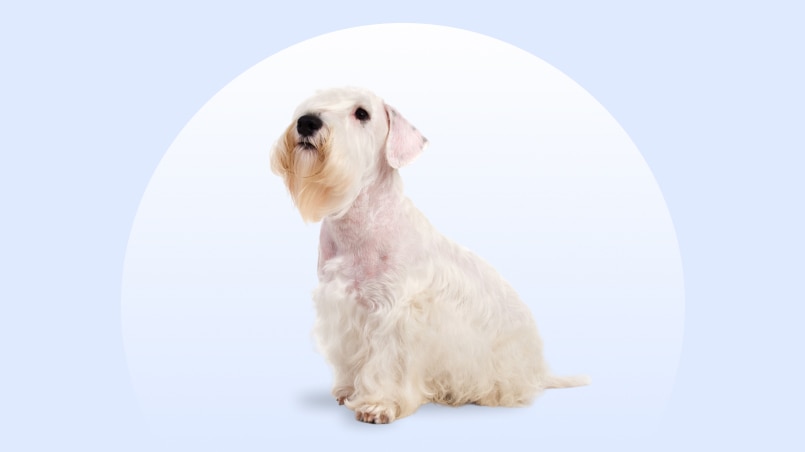
The Sealyham Terrier is a compact cutie who sports some serious scruff. These working dogs are alert and determined but also know how to turn on the charm. With good humor to spare, Sealys can thrive in both country and city life as long as they receive ample attention and exercise.
Attentive, Amiable, Affectionate
23–24 inches
10.5 inches
12–14 years
White with possible badger, black, tan, or lemon markings
Sealyham Terriers are wiry-haired Welsh working dogs who were bred to root out foxes, otters, and badgers from their subterranean abodes. These tasks called for a valiant, vigilant dog with a powerful body and bark, and the Sealy is just that.
But despite their rough-and-tumble history, Sealyham Terrier dogs have a softer side—and we aren’t just talking about their thick undercoat. Sealys are known for their comedy as much as their courage and make affectionate, devoted companions.
Sealyham Terrier Characteristics
Sealyham Terrier Appearance
According to the breed standard, Sealyham Terriers “should be the embodiment of power and determination.”
This may sound like a comical description for a dog who looks somewhat like a fringed footstool—and who couldn’t beat a vinyl record in a height contest—but Sealys are stronger than they look. After all, it takes a dog of great courage and strength, yet diminutive size, to chase badgers underground.
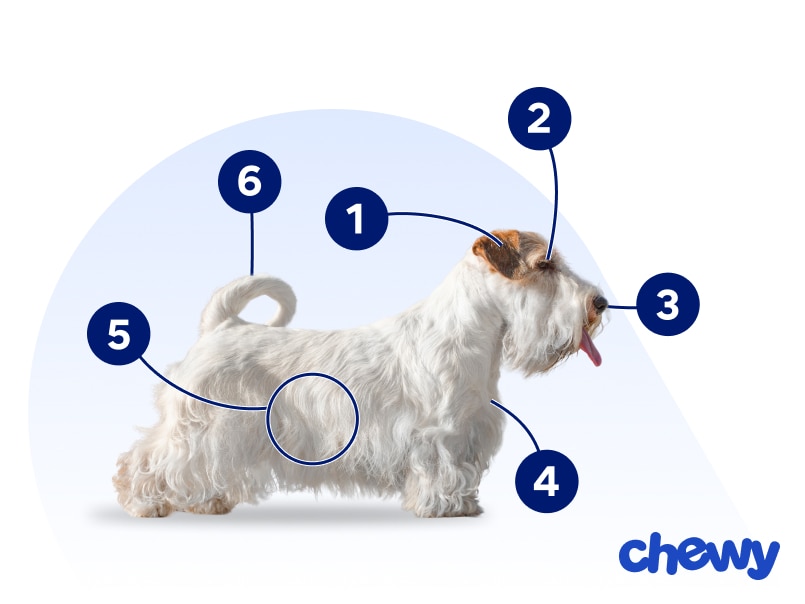
- Ears
Sealy ears are thin and triangular but rounded at the tip. They fold forward at the top of the head so the tips reach the outer corner of the dog’s eyes.
- Eyes
Sealyham Terriers have dark, oval-shaped eyes that add to their alert appearance.
- Nose
Sealys have a black nose and big nostrils.
- Coat Length
The Sealyham Terrier has two distinct coats. The undercoat is soft, short, and dense. The topcoat is coarse and wiry, and medium in length.
- Coat Color
Sealy coats can either be all white—or white with badger, black, tan, or lemon markings.
- Tail
The Sealy tail is often docked and upright. Their tails were typically docked to give handlers a firm tail to tug if and when their dog got stuck in a hole chasing prey. However, the American Veterinary Medical Association opposes that practice.
Sealyham Terrier Temperament
The Sealyham Terrier bears many characteristics one would expect to see in a breed originally designed to pursue badgers on a hunt. Sealys are brave, loyal, alert, and highly intelligent.
But their high prey drive means they might see other creatures as something to chase after—maybe even a passing squirrel or cat. Early and consistent socialization is a must for Sealyham Terrier puppies—this will help them grow into well-adjusted (and well-mannered!) adults.
Overall, Sealys might do best as the only pet at home. They might do better with other dogs than with cats or other animals, especially when introduced properly.
Related Breeds



How to Care for a Sealyham Terrier
Sealyham Terriers are devoted, caring dogs who need the same in return. For the Sealy, that will look like providing regular coat care, daily mental stimulation and physical exercise, early socialization, positive reinforcement training, companionship, and safety.
Grooming
Training
Diet
Exercise
Environment
Sealyham Terrier Health
The average Sealyham Terrier life span is 12–14 years. Like all dogs, they are prone to certain health conditions. It’s important to partner with an ethical breeder who prioritizes health and genetic testing.
- Primary lens luxation (PLL): PLL describes an eye lens that has moved out of its normal position. Signs of PLL include redness, teariness, cloudiness, and pain. PLL can also cause inflammation and glaucoma, and can progress to blindness. Treatment may include surgical removal of the lens as well as medications to help manage inflammation, eye pressure, pain, or other complications.
- Congenital deafness: Congenital deafness in dogs can be associated with white coat pigmentation. The condition may affect one ear or both. There is no cure, but with extra accommodations and training, dogs with hearing loss can live full, happy lives.
- Periodontal disease: Also known as dental disease, periodontal disease occurs when enough bacteria accumulates in the dog’s mouth to damage the teeth, gums, jawbones, and other tissues. The condition is common in all dogs, but small breeds are especially likely to develop Signs of periodontal disease include drooling, sneezing, bad breath, dental tarter, missing teeth, red/bleeding gums, and root exposure. Regular toothbrushing can help prevent periodontal disease, while professional dental cleanings can both prevent and manage it. Severe cases may require tooth extraction.
Sealyham Terrier History
Around 1848, Captain John Edwardes began developing a new breed of dog on his estate, Sealyham House, in Haverfordwest, Wales. Edwardes didn’t keep records of his breed-building pursuits, so the specifics remain a mystery. However, the American Sealyham Terrier Club notes that the Sealy’s mixed ancestry likely includes white terriers brought to Wales by Edwardes’ Flemish ancestors around the time of the Norman Conquest in 1066. Now-extinct white terriers (similar to Bull Terriers), Dandie Dinmont Terriers, and West Highland White Terriers are also thought to be part of the mix.
Sealys were originally bred to root out badgers, foxes, and otters. According to the breed club, their white color was crucial in keeping them safe on the job, as it was easier for hounds to distinguish a Sealyham from prey.
Sealys gained American Kennel Club (AKC) recognition in 1911, joining the Terrier Group. After World War I, the breed became a hit with Hollywood and international royalty alike, including prominent pet parents Alfred Hitchcock, Cary Grant, Elizabeth Taylor, and Princess Margaret. Today, Sealys are somewhat rare, as often happens to working dogs whose work becomes less common.
Fortunately, these days they are no less beloved by those who know their nature.