British Shorthair
Updated June 5, 2026
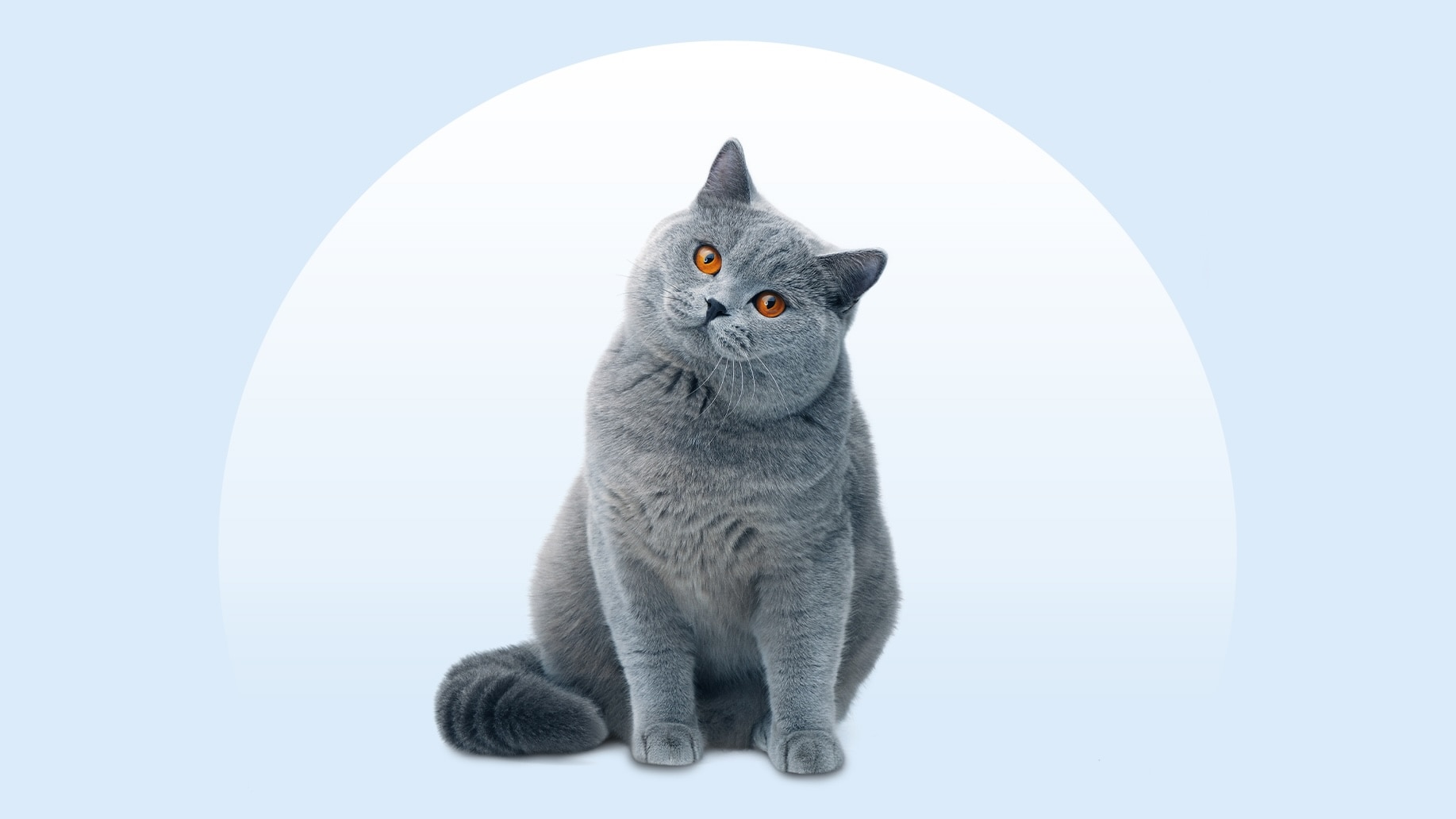
British Shorthair
Updated June 5, 2026
The low-key and lovable British Shorthair cat is almost too cute to be real. With chubby cheeks and a plush coat, they’re often compared to teddy bears. Equally at home in a busy household as a quiet apartment, these cats make highly adaptable—and adorable—companions.
Calm, Loyal, Affectionate
10–17 pounds
12–20 years
The British Shorthair may be literature’s most famous feline. With their round cheeks, big eyes, and permanent grin, they’re widely believed to be the inspiration behind the Cheshire Cat in Lewis Carroll’s “Alice’s Adventures in Wonderland.”
While these cats are best known for their thick blue-gray coats, they actually come in a variety of colors and patterns, from cream and cinnamon to tabby and tortoiseshell.
With gentle, easygoing personalities, British Shorthairs are low-maintenance cats who get along with just about anyone, including children and other pets.
British Shorthair Characteristics
British Shorthair Appearance
What do you get when you cross the cuteness of a stuffed animal with the stocky build à la an English Bulldog? A British Shorthair cat, of course.
Their round heads and chipmunk cheeks give them an almost cartoon-like quality, while their broad chests and short, thick legs round out that signature look.
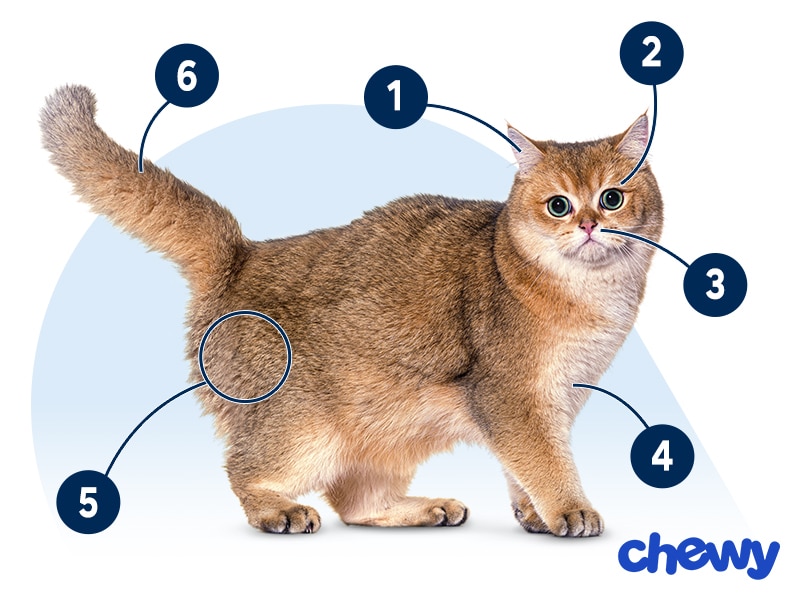
- Ears
British Shorthair cats have medium-sized ears with rounded tips, set wide apart on a broad, round head.
- Eyes
They have large, round, wide-set eyes. British Blue cats (those with the classic blue-gray coat) typically have intense copper or gold eyes. Other possible eye colors include blue, green, and hazel.
- Nose
They have short, broad noses, and their nose color typically corresponds to their coat color. A gray British Shorthair will likely have a blue or gray nose, while a black British Shorthair will have a black nose.
- Coat Length
Their short, dense double coats are velvety soft to the touch.
- Coat Color
While the classic blue-gray gets all the attention, this breed comes in a wide range of colors, including white, black, cream, cinnamon, and fawn. They can also have several different patterns, such as solid, tabby, bicolor, and colorpoint.
- Tail
Their tails are medium-length and thick at the base, tapering slightly to a rounded tip.
British Shorthair Temperament
British Shorthair cats are love bugs, but they’re not lap cats. These affectionate cats will follow you from room to room, but they’d rather sit beside you than on you.
They’re also not typically big fans of being picked up or carried, which is worth keeping in mind for homes with young children. Kristen Brauer, DVM, a veterinarian at Healing Hands for Pets in St. Petersburg, Florida, says these cats tend to do best with adults and older children who can respect their boundaries.
Just because they’re not all over you doesn’t mean they’re unfriendly. In fact, British Shorthairs are sweet and loving cats who bond deeply with their families in a more subtle way.
They’re also slow to mature. Dr. Brauer says British Shorthair kittens are playful and energetic, and they maintain that liveliness for the first two to four years of life. Once they reach adulthood, the calm, low-drama personality they’re known for takes over.
Unlike high-energy cat breeds like the Bengal or Savannah, you’re more likely to find a mature British Shorthair cat snoozing on a windowsill than sprinting through the house. True to their laid-back nature, these cats aren’t overly demanding or vocal. When they want attention or a snack, they’ll let you know with a soft meow or chirp.
Related Breeds


How to Care for a British Shorthair
British Shorthair cats have—you guessed it—short coats. Though their fur is incredibly dense, it’s fairly low-maintenance.
The biggest care considerations for this breed are weight management (their stocky bodies are prone to obesity) and keeping their teeth and gums healthy.
Grooming
Diet
Exercise
Environment
British Shorthair Health
The average British Shorthair lifespan is 12–20 years, though it depends on various factors, including diet, genetics, and preventive care.
These cats are generally healthy, but there are some health conditions to keep on your radar:
- Hypertrophic cardiomyopathy (HCM): This inherited heart condition causes the muscle walls to thicken, which can lead to blood clots or heart failure. While you can’t prevent HCM, Dr. Brauer says it can be managed if caught early, making regular cardiac screenings vital. If you’re working with a British Shorthair breeder, ask for proof of HCM screening in the parents.
- Obesity: Those stocky bodies can make weight gain harder to spot. Portion control and daily play are the best preventive tools.
- Polycystic kidney disease (PKD): This inherited condition causes cysts to form in the kidneys, which can eventually lead to kidney failure. Genetic testing is available, and responsible British Shorthair breeders screen for this disease.
- Dental disease: British Shorthair cats’ short faces are prone to tartar buildup and gum disease. Regular tooth brushing and annual professional dental cleanings help keep this in check.
- Hemophilia B: Dr. Brauer says some British Shorthair lines are at risk of this rare hereditary bleeding disorder. DNA testing can help breeders identify carriers.
- Cataracts: Gradual changes to the lens of the eye that can lead to vision loss over time. Dr. Brauer says that, similar to humans, surgery is an option to remove the affected lens and help restore vision.
- Arthritis: Their big-boned builds can put extra strain on joints as they age, particularly if they’re overweight. Maintaining a healthy weight and discussing joint supplements can help manage this risk.
British Shorthair History
British Shorthair cats are world travelers with ancient roots. These cats originated in Egypt, traveled to Rome with humans, and eventually landed in Great Britain when Roman soldiers brought them along to guard food supplies from rodents.
For much of their history, British Shorthairs were simply beloved house cats in Britain, valued for their hunting skills and loyal companionship.
That changed in 1871, when Harrison Weir, a British artist and cat enthusiast, organized the first major cat show at London’s Crystal Palace. British Shorthairs were among the featured breeds, and a blue tabby female took Best in Show.
The breed’s popularity took off from there. By the late 1970s, the British Shorthair had earned full recognition from all major cat registries, including the Cat Fanciers’ Association (CFA) and The International Cat Association (TICA).
Today, these teddy bear cats might catch more zzz’s than mice, but they consistently rank among the world’s most popular cat breeds.