Egyptian Mau
Updated August 21, 2026
Egyptian Mau
Updated August 21, 2026
Ready to be wowed? Meet the Egyptian Mau. These cats have an exotic spotted coat, gooseberry-green eyes, and Olympian-level running skills. They’ll pick a favorite person to dote on, but they’re affectionate with the whole family—and they never turn down a game of fetch.
Devoted, Athletic, Intelligent
7–12 pounds
10–15 years
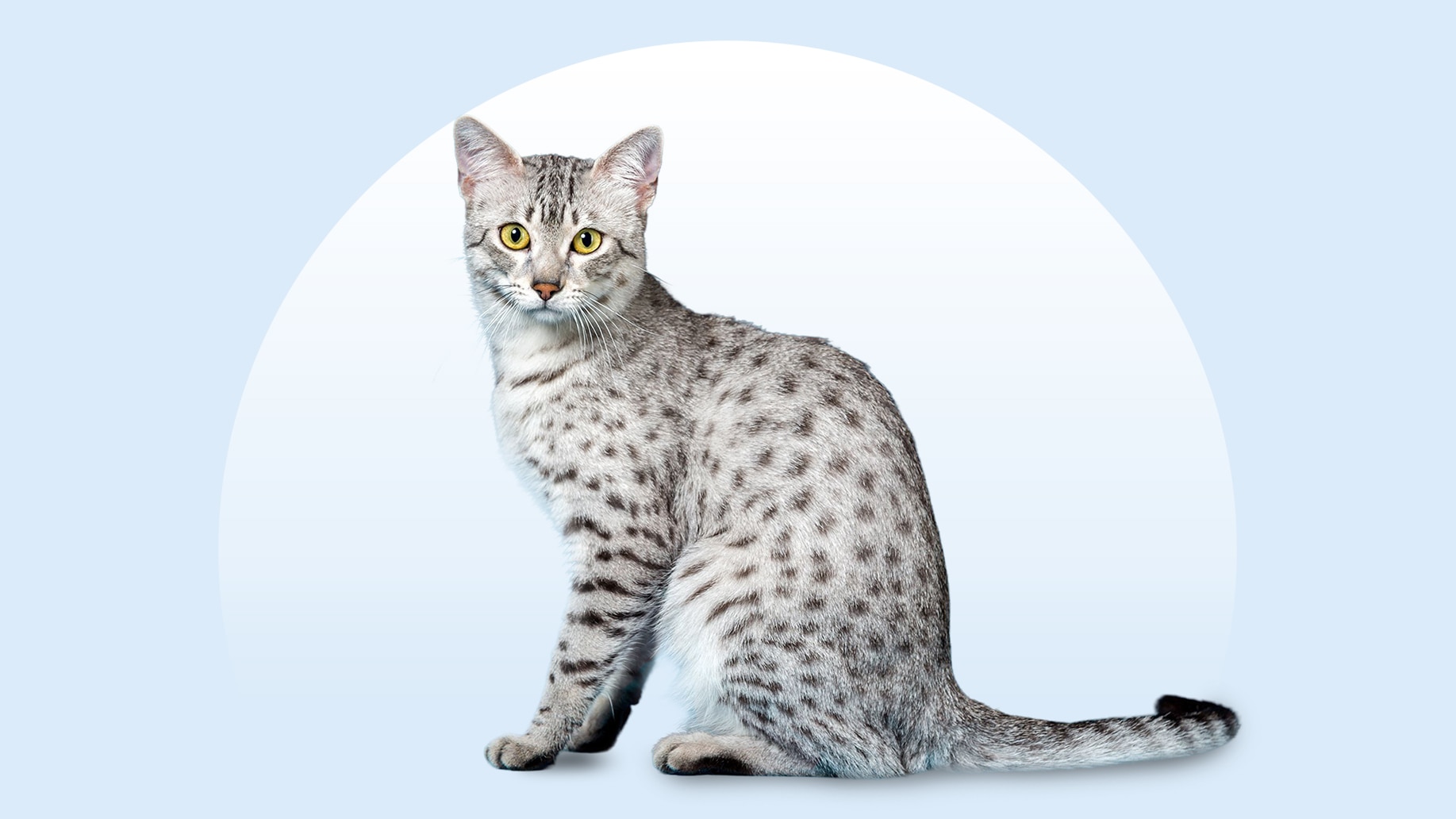
The Egyptian Mau looks—and moves—like a miniature cheetah. With a spotted coat, gorgeous green eyes, and the ability to run up to 30 miles per hour, they’re as striking as they are speedy.
Maus can be reserved with strangers, but once they trust you, they’re loving, outgoing, and deeply devoted. These little athletes like to stay busy and do best in an active home.
Whether they’re racing around the room, turning on the faucet for playtime (yes, Egyptian Maus are known to love water), or wagging their tail when happy, these dog-like cats will bring lots of love and laughter to your life.
Egyptian Mau Characteristics
Egyptian Mau Appearance
The Egyptian Mau is the only domestic cat breed with naturally occurring spots, but that’s not the only physical trait that sets them apart.
Maus have signature gooseberry-green eyes and a distinctive “M” on their forehead. That marking is often called the “mark of the scarab,” after a beetle that was considered sacred in ancient Egypt.
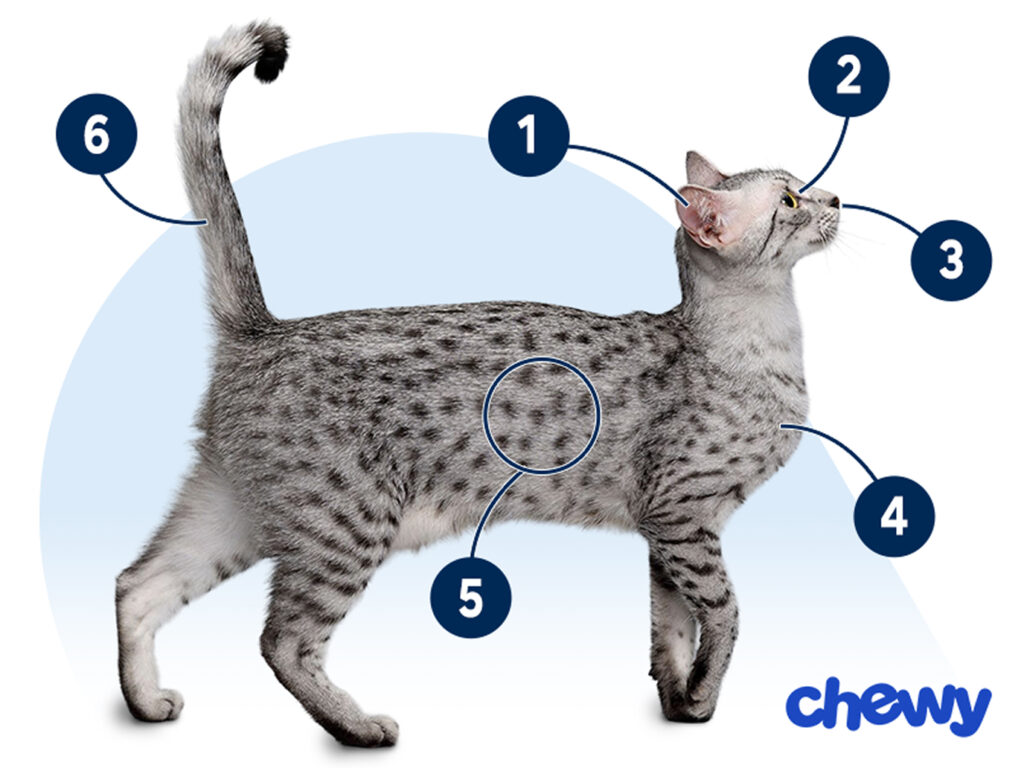
- Ears
Egyptian Maus have medium-to-large, moderately pointed ears. The insides are a shell pink, and some Maus have small tufts.
- Eyes
Large and slightly almond-shaped, the Mau’s eyes are always gooseberry green, rimmed by natural black that looks like eyeliner. Egyptian Mau kittens may have amber eyes at first, but they gradually turn green by around 18 months.
- Nose
The Egyptian Mau cat breed has a long, even nose that contributes to their characteristic “worried” expression (along with their eyes and brow). Silver and bronze Maus typically have a brick-red nose outlined in black, while smoke Maus have a black nose.
- Coat Length
The Mau has a short-to-medium coat with a glossy sheen. Texture depends on color: silky and fine on smoke Maus, and denser on silvers and bronzes.
- Coat Color
Egyptian Maus come in three official colors: silver, bronze, and smoke, each with random spots that vary in size and shape.
- Tail
Medium in length and thick at the base, the tail tapers slightly and is banded with dark rings.
Egyptian Mau Temperament
Egyptian Maus will greet their favorite people at the door—but strangers? Forget about it. They can be shy (and even a little aloof) until they warm up. After that, they’re affectionate, fearless, and curious, says Melanie Morgan, secretary of the CFA Egyptian Mau Breed Council and president of the Global Egyptian Mau Society and International Egyptian Mau Society.
These loyal cats form deep bonds and like to follow their chosen people everywhere. If they aren’t watching the household from their tallest cat tree, you’ll find them in the middle of the action, especially if it involves playtime.
Maus express happiness and excitement by wagging their tail like a dog and communicate in soft chirps, chortles, and trills rather than loud meows. Most like to cuddle and be held, but only after they’ve had their fill of running, jumping, and climbing.
And these cats don’t do anything halfway. Morgan describes Maus as “intense at every level” (food, friends, play), and recommends having another pet around to keep them company. They typically get along well with other cats and cat-friendly dogs when properly socialized and introduced.
Since they’re a sensitive breed who can get scared and stressed by loud noises, chaotic households aren’t the best fit. They tend to do best with older kids who can match their energy without cranking up the volume. Homes with young children should always have multiple designated quiet spots where Maus can decompress.
Related Breeds



How to Care for a Egyptian Mau
Egyptian Maus have a short- to medium-length coat that’s easy to maintain with weekly brushing. The bigger commitment is to their physical and emotional needs. These cats live for daily attention and playtime, and can get a bit mischievous if they feel bored or neglected.
Grooming
Diet
Exercise
Environment
Egyptian Mau Health
With good care, Egyptian Maus typically live 10–15 years, and some live even longer. Regular veterinary checkups, a healthy weight, and a nutritious diet all support a long, healthy life.
Maus are considered a generally healthy breed, but there are a few conditions worth knowing about:
- Hypertrophic cardiomyopathy (HCM): This heart disease thickens the heart muscle, making it harder for the heart to pump efficiently. Dr. Nichols notes that HCM is common in Egyptian Maus and recommends routine vet visits to help catch it early. Because it can be inherited, choosing an Egyptian Mau breeder who screens their cats is crucial.
- Urolithiasis (urinary stones): Maus can be prone to bladder stones, which are especially risky in males, where a stone can cause a life-threatening blockage. Call your veterinarian right away if you notice straining to urinate, frequent litter box trips, or blood in the urine. Adding wet food to a Mau’s diet can increase hydration and help prevent issues.
- Pyruvate kinase deficiency (PK-Def): This inherited condition can lead to anemia and affects an enzyme that red blood cells need. A genetic test is available, and responsible breeders screen for it to keep it out of their lines.
- Leukodystrophy: This rare but serious neurological disorder affects the nervous system and can appear in kittens as young as 7 weeks old. There is no cure, and signs include balance issues, tremors, muscle weakness, and vision changes.
Egyptian Mau History
While it’s hard to pinpoint an exact timeline, the Egyptian Mau is likely one of the oldest domestic cat breeds.
The word “mau” meant “cat” in Ancient Egypt, and spotted cats who look uncannily like today’s Maus (right down to their black-rimmed eyes) appear in Egyptian artwork dating back thousands of years. Whether the modern breed descends directly from those ancient cats is still debated, but the resemblance is tough to ignore.
Many centuries later, the breed made its way to the United States. In the 1950s, a Russian princess named Nathalie Troubetskoy, who was living in exile in Rome, became captivated by a spotted cat and started a breeding program. When she immigrated to the United States in 1956, she brought three Maus with her. Those three cats became the foundation of the breed in North America.
The CFA accepted the Egyptian Mau for registration in 1970 and granted the breed championship status in 1977. The International Cat Association followed in 1979. Today, the Mau remains relatively rare, with more demand than there are kittens to go around.