Ragdoll vs. Siamese: Which Colorpoint Cat Is Right for You?


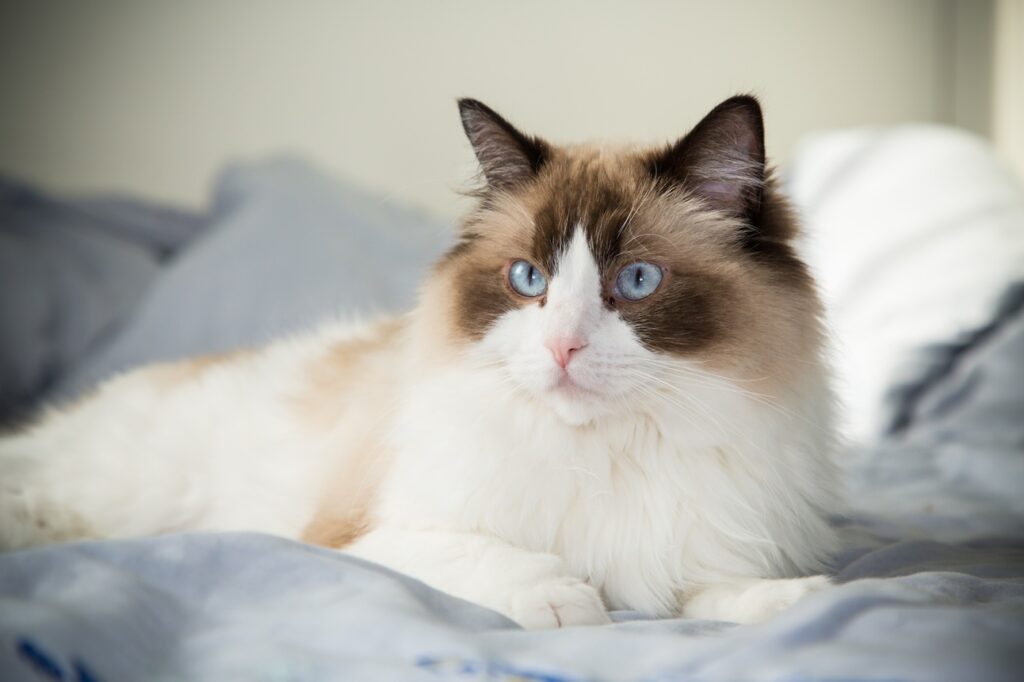
Photo by peredniankina/iStock / Getty Images Plus via Getty Images
Ragdoll and Siamese cats are both pointed cats—meaning they have a light body with darker “points” on the ears, face, paws, and tail—but that’s about where the similarities end. One’s a floofball with a laid-back lap-cat energy, and the other’s sleek, active, and always ready to chat.
If you’re torn between a Ragdoll and a Siamese, this head-to-head comparison unpacks their history, looks, personality, and everyday care needs to help you find your perfect match.
Key Takeaways
- Siamese and Ragdolls are both colorpoint cat breeds with striking blue eyes.
- Ragdolls have longer fur and more involved grooming needs than Siamese cats.
- Siamese are energetic, outgoing, and talkative, while Ragdolls tend to be quiet and laid-back.
- Both are generally healthy cats who can live into their late teens or even longer.
History
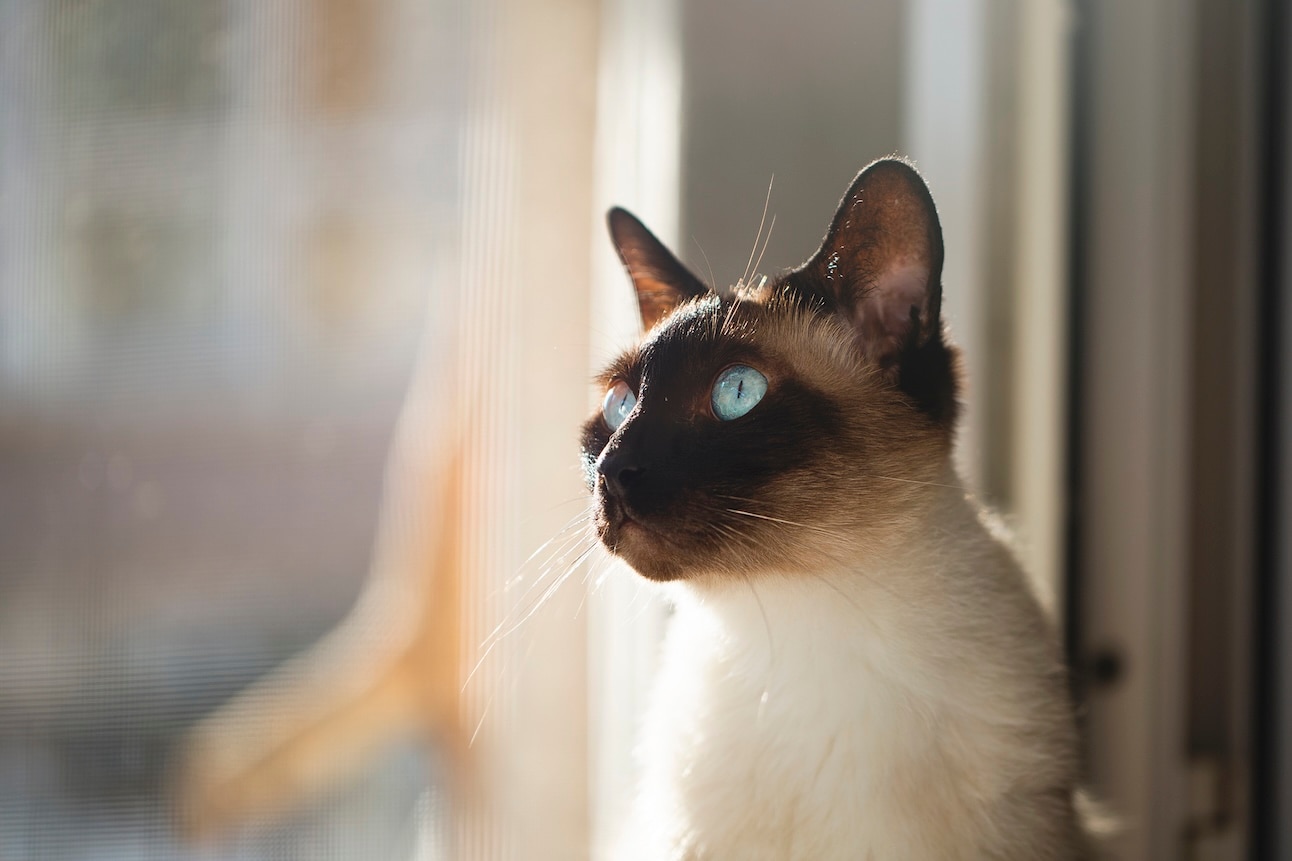
Photo by Xesai/iStock / Getty Images Plus via Getty Images
Siamese cats are one of the oldest documented cat breeds, tracing back to ancient Thai manuscripts from the Ayutthaya period (1351–1767 CE). Their name gives away their roots: Siamese cats hail from Siam (modern-day Thailand), where they were considered sacred and kept company with nobles and royalty.
By 1906, the Cat Fanciers’ Association (CFA) had officially recognized the breed, cementing its place as one of the most beloved cats in the U.S.
Nearly 60 years later came the Ragdoll—and their story is far more eccentric.
A white domestic longhair named Josephine, discovered in Riverside, California, is credited as the breed’s foundation cat. She carried the colorpoint gene and gave birth to a litter of kittens that breeder Ann Baker described as unusually docile and affectionate.
Legend has it that Josephine passed on a strange new trait to her kittens: going completely limp when held, inspiring the name “Ragdoll.” The breed was recognized by the CFA in 1993.
Appearance
Apart from their signature points and big blue eyes, the Ragdoll and Siamese are easily distinguished by their coats: one is a glorious fluff ball, while the other is sleek and smooth. But there are a few other differences, too.
Coat
Ragdolls have a semi-long coat with minimal undercoat, creating a soft, silky layer that is often compared to rabbit fur. Siamese cats have a short, fine coat that lies flat against the body, feeling satin-soft to the touch.
Size
It’s not all floof! Ragdolls are one of the largest domestic cat breeds, with males weighing up to 20 pounds (or more). On the flip side, the Siamese boasts a slim, athletic silhouette, usually averaging 5–12 pounds.
Tail
A Ragdoll’s tail is long, bushy, and beautifully plumed. In contrast, the Siamese has a long, thin tail that tapers to a fine point, accentuating the breed’s slender physique.
Head Shape
Ragdolls have a broad, wedge-shaped head with soft, rounded contours. Siamese cats have an angular wedge-shaped head, forming a triangle from the nose to the tips of their ears.
Ears
Ragdolls’ ears are rounded at the tips. Siamese cats have pointed ears.
Personality
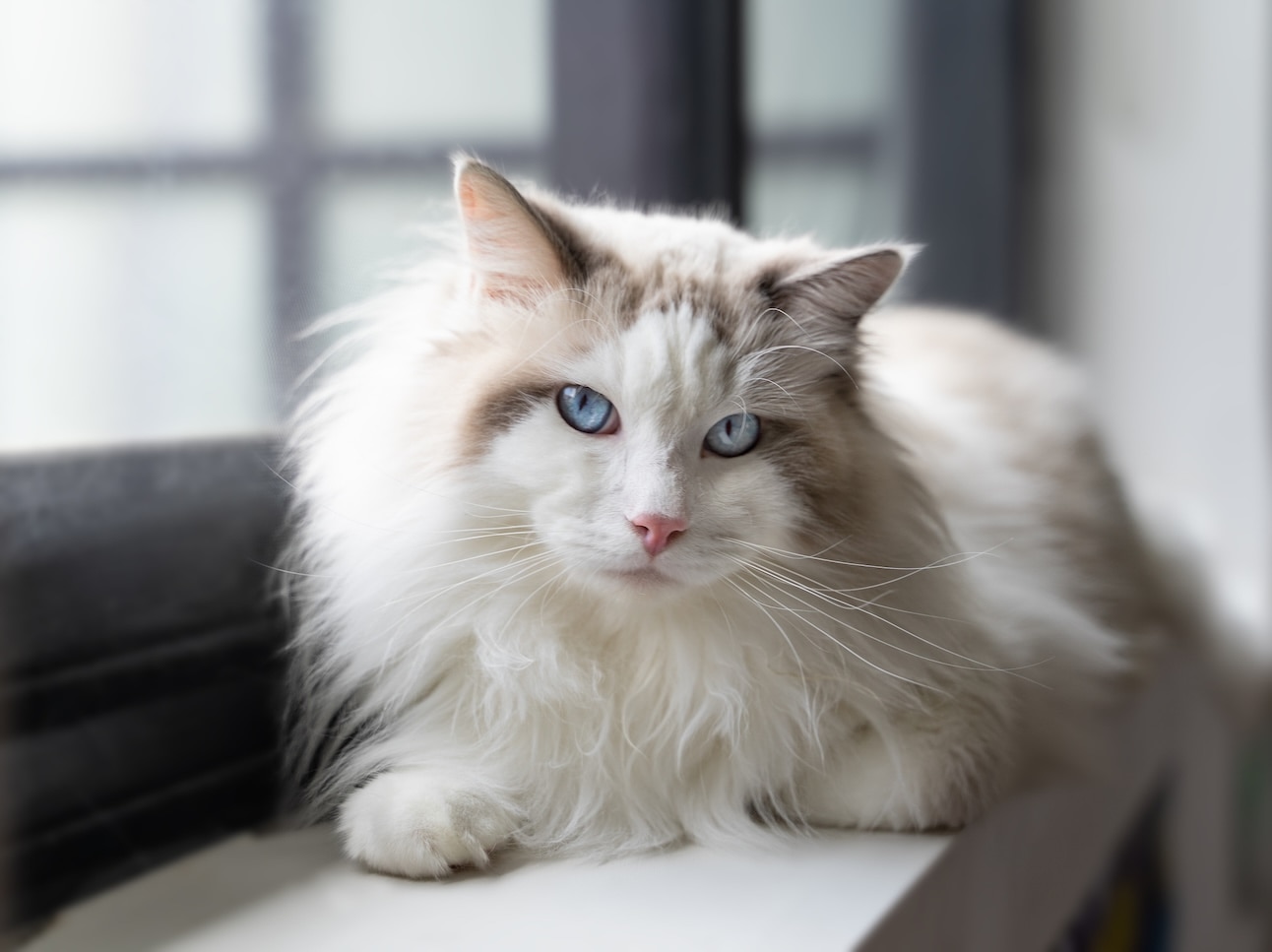
Photo by Julia Gomina/iStock / Getty Images Plus via Getty Images
Both the Ragdoll and the Siamese are deeply affectionate, loving companions often described as Velcro kitties. But while both are social butterflies who adore their humans, their temperaments actually vary drastically.
Ragdolls tend to have a quiet, sweet presence. They’re more likely to flop in front of you and show their belly than climb countertops, making them excellent family cats for households with children. They also tend to do well with other pets, including cats and dogs, thanks to their easygoing, laid-back nature.
Siamese cats are intensely loyal, often picking one primary person in the household to bond with most deeply. You’ll never have to guess where your Siamese is—if they aren’t glued to your side, you’ll definitely hear them.
“These cats can be incredibly vocal,” says Carly Fox, DVM, senior veterinarian at The Schwarzman Animal Medical Center in New York City. They are also extremely active cats who love to play and jump up on just about everything.
Because they’re so high-energy, Siamese are best suited for older kids and adults. They might (accidentally!) be too rough with little ones. They can also be prone to separation anxiety, so Siamese cats are not the best fit for households where they’ll be left alone for long stretches.
Exercise Needs

Photo by Tetiana_Chudovska/iStock / Getty Images Plus via Getty Images
While most indoor cats need about 20–30 minutes of daily activity, the high-octane Siamese is a different story.
“Siamese are more energetic than Ragdolls, so they could likely benefit from closer to 40 minutes a day,” Dr. Fox says. Break up their play into a handful of 10- to 15-minute play sessions spaced throughout the day.
Ragdolls, on the other hand, are one of the laziest cat breeds. They often need encouragement to get their 20–30 minutes of daily exercise.
It’s not just their energy levels that differ. Ragdolls and Siamese can also have completely different play styles, Dr. Fox says.
Ragdolls often take a slow, observant approach to playtime, stalking and studying their prey for a while before making a quiet move. Toys that reward patience work best, like puzzle feeders, treat-dispensing balls, or slow-moving wand toys they can stalk at their own pace.
Recommended Products
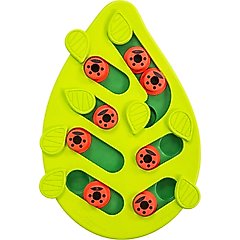
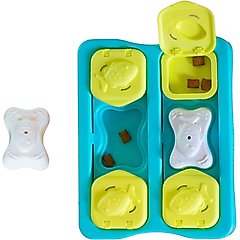
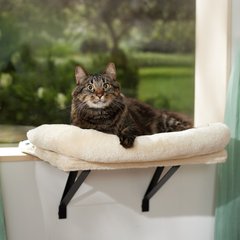
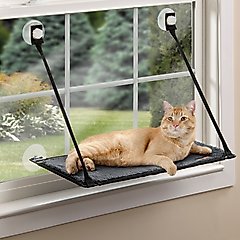
A window perch for bird watching or a trickling water fountain can also satisfy their love of quiet observation.
Recommended Products

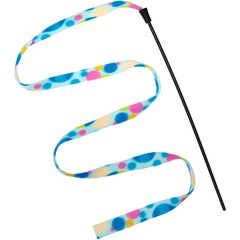
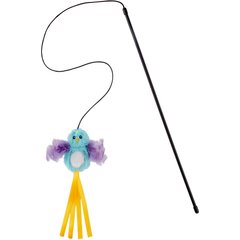
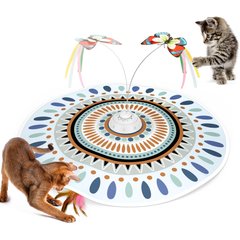
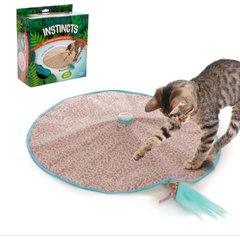
Siamese cats, on the other hand, are high-energy sprinters who prefer an immediate, full-throttle physical chase. Wand teasers, laser pointers, and fast-moving mechanical toys tap into their instinct to pursue. Interactive food puzzles are great, too, but pairing them with high-speed play beforehand helps burn off that “go, go, go” energy.
Recommended Products

Grooming
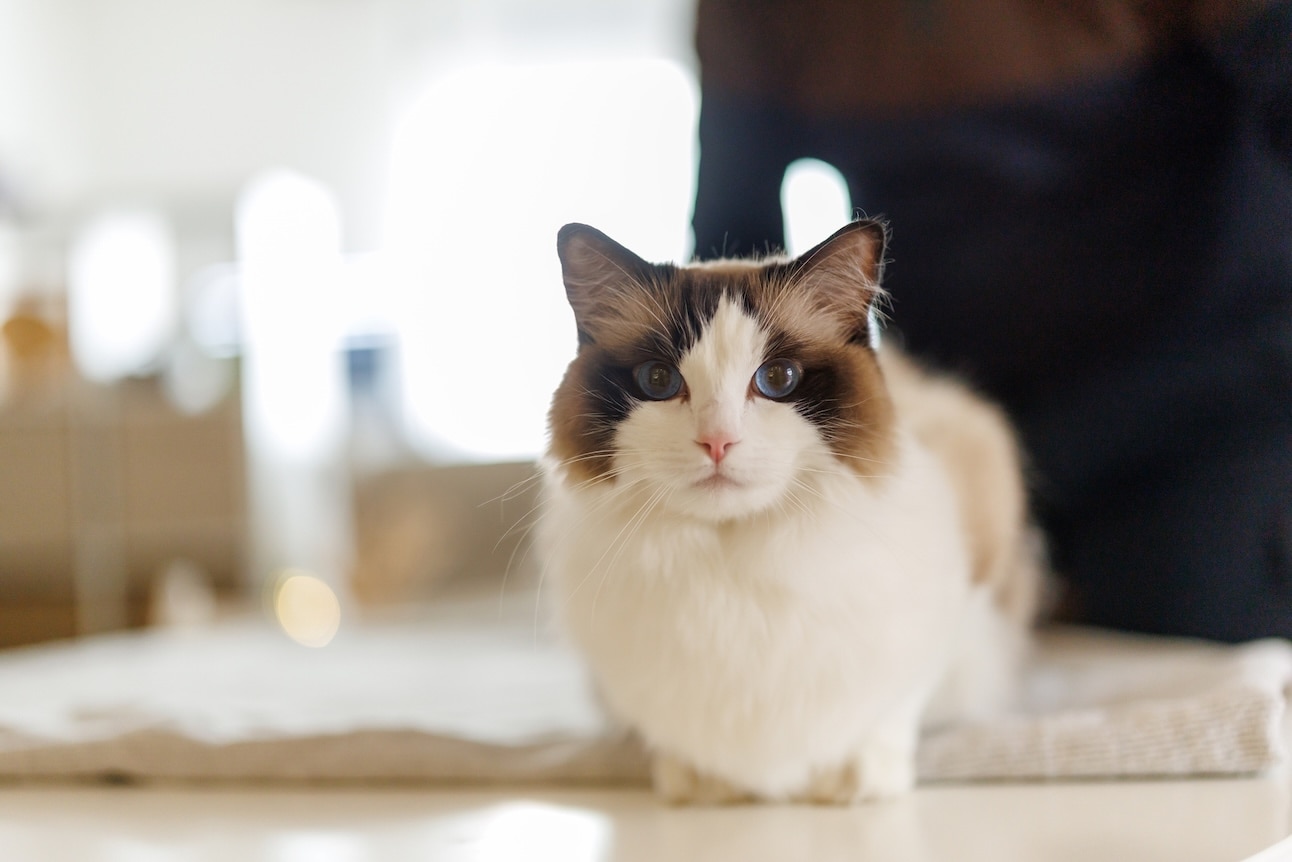
Photo by bojanstory/E+ via Getty Images
Both breeds need the basics: regular nail trims, at-home dental care, and routine brushing. Where they differ is how often they need to be brushed, whether professional grooming is required, and what tools belong in your grooming kit.
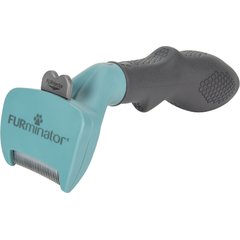
Master Cat Groomer Daniel Lioyryan says that when it comes to coat care, Ragdolls rank among the most high-maintenance breeds (alongside other longhaired cat breeds like the Persian, Himalayan, Siberian, and Maine Coon). Brush your Ragdoll a few times a week—if you don’t keep up a frequent routine, they can develop stubborn mats.
“Mats can certainly be painful,” Lioyryan says. “Imagine tying your armpit hair to the hair on your head and walking. When mats develop—especially in areas of high mobility like the armpits, neck, head, and hind legs—cats experience pulling every time they move.”
You’ll need a few tools in your Ragdoll grooming kit:
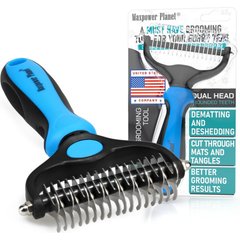
- A deshedding tool to loosen the undercoat (use this monthly)
Recommended Product
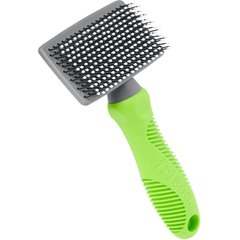
- A comb to prevent small mats and a slicker brush for the topcoat (use these a few times a week)
Recommended Products

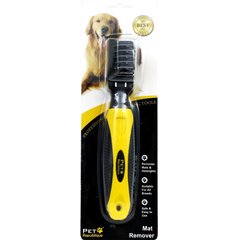
- A dematting rake to work out stubborn mats
Recommended Product
Siamese cats can get away with a once-a-week brushing session, Dr. Fox says. Pet parents can use a slicker brush, grooming glove, or even just their damp hands to remove loose hair.
Recommended Products
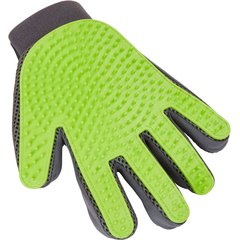
Ragdolls are far more likely to need a trip to a professional groomer or a sanitary trim from your vet, since their long coat can trap fecal material and urine, leading to dermatitis and odor, Dr. Fox says. Siamese cats rarely require professional grooming.
Health
Both breeds are relatively healthy and capable of living into their late teens, but Siamese are known for their especially long lives—30-year-old Scooter was once the world’s oldest living cat. Still, each has health conditions to watch for, which is why Dr. Fox recommends insurance to all pet parents.
Common health considerations for Ragdolls include:
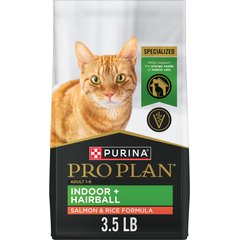
- Hairballs: “Aside from regular brushing, you can feed a hairball diet or give a supplement made to help hairballs move through the GI tract,” Dr. Fox says.
Recommended Products

- Hypertrophic cardiomyopathy (HCM): A heart disease characterized by thickening of the heart wall. A genetic test is available, and reputable breeders should provide HCM screening results.
- Obesity: Extra pounds are easy to miss under a mountain of fur. “Ragdolls often ‘hide’ being overweight due to their large body size, fluffy coat, and low activity level,” Dr. Fox says.
- Polycystic kidney disease (PKD): Ragdolls may be at risk for this inherited condition that causes cysts to develop in the kidneys. There’s no cure, but early detection allows for better management.
- Urinary tract issues: Male Ragdolls have a higher occurrence of crystals, blockages, and feline idiopathic cystitis, although females can be affected too. Feeding mostly wet cat food is a simple way to promote urinary tract health.
Siamese are at higher than average risk for:
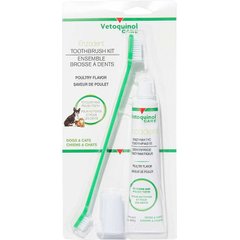
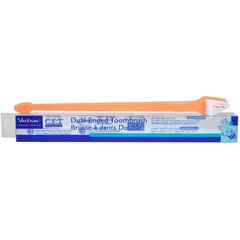
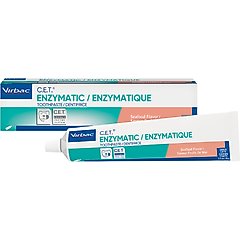
- Dental disease: “The Siamese’s narrow face can predispose them to dental crowding and periodontal disease,” Dr. Fox says. The best prevention method is daily toothbrushing with a cat-safe toothpaste and toothbrush.
Recommended Products
- Amyloidosis: Abnormal protein deposits in organs, particularly the liver and less frequently the kidneys.
- Pica: Eating non-food items. Suckling behavior is also common in Siamese.
- Asthma: Unscented cleaning products and avoiding smoke or heavy perfumes can help lower respiratory risk.
- Eye problems: It’s not unusual for Siamese cats to be cross-eyed, which doesn’t affect their quality of life. On the other hand, they are also at risk for progressive retinal atrophy (PRA), a disease that can eventually lead to blindness.
- Feline hyperesthesia syndrome: A poorly understood condition that leads to cats having touch sensitivity, twitchy skin, and unusual behavior.
Ragdoll vs. Siamese Cat: Which Is the Breed for You?
| Size | Lifespan | Personality | Grooming Needs | Health Considerations | |
|---|---|---|---|---|---|
| Ragdoll | Large | 13–18 years | Affectionate, docile, gentle | High | Moderate level of health problems |
| Siamese | Small to medium | 10–20 years | Social, chatty, smart | Low | Moderate level of health problems |
Choosing between a Ragdoll and a Siamese really comes down to the kind of energy you want in your home and the care needs that suit your lifestyle.
If you’re drawn to a chatty, super-smart companion who thrives on interactive play and keeps you entertained all day long, the Siamese might be your perfect match—and you’ll be rewarded with a low-maintenance coat, too. If you prefer a quiet, easygoing lap cat who brings a calm presence to your space, the Ragdoll could be the one—as long as you’re ready to embrace a frequent grooming routine.
No matter which breed you choose, both Ragdolls and Siamese bring deep affection and loyalty to the humans lucky enough to call them family.
Attributions