The Best Pet Birds for Kids


Photo by Yellow-green budgie sitting on a girls hand against blurred background. Focus on the bird.
When choosing a pet bird for your child, there are a lot of questions to consider. How much daily care, interaction, and affection does the bird species need? How much upkeep like cage cleaning, bathing, feeding and care will the pet bird require?
The age of your child and the life expectancy of the bird species also come into play. Some bird species can live up to 30 years. Will the bird’s lifespan mean your child will be caring for their pet into adulthood?
Is your child old enough and responsible enough to remember to feed and water their pet every day? How much time are you willing to commit to fill in the gaps? Does your teenager have a full schedule of schools, sports, and social activities—plus a part-time job?
To help you find the right pet bird for your child, we came up with a shortlist of the best pet birds for kids—with important info about their care needs.
Key Takeaways
- Prospective pet parents should be prepared to closely oversee the daily care of a pet bird for children under 12.
- Choose a pet bird that matches your child’s maturity, patience, and activity levels, and ability to handle animals gently.
- Canaries and society finches are good pet birds for families wanting a pet bird that's more hands-off.
- Parakeets and cockatiels can make great pet birds for older children—but they need daily interaction, enrichment, and care.
- Before choosing a pet bird for a child, consider the bird’s lifespan, costs, and care needs—and be prepared to fill in any gaps.
Is a Pet Bird Right for Your Child?
Parrots and birds are prey animals, quick movements, loud noises and grabbing hands are all seen as threatening to them. A parrot might respond by biting or trying to fly away.
This is why a child that has lots of energy and not much self control over his or her movements or desires may not be an ideal caregivers for a pet bird. We often recommend that generally, only children 12 and older should be responsible for their own pet bird.
There are, of course, some mature children, who are exceptions to this rule. To help determine if your child is a good candidate to care for a pet bird, here are some things to consider.
You should not get a pet bird for your child, if:
- Your child is under the age of 12 and will be the bird’s sole caretaker. Some children don’t understand the consequences of their actions, especially if they forget to give the pet bird food or water. Animal cruelty should not be practiced so that a child can learn responsibility the hard way.
- Your child has no money to take their pet to an avian veterinarian if their bird gets sick. Parents who don’t allow pet birds that are sick to be taken to the vet because they don’t want to spend the money teach the child a number of bad lessons. If the parent or child is unable or unwilling to take to the pet bird to a vet, then don’t get the pet bird.
- If the child is too busy with extracurricular activities to spend at least one to two hours each day hanging out with the pet bird.
- If the child is not willing to check out websites or read magazines and books about a pet bird before adopting one.
- If the child has trouble controlling his or her emotions. Prey animals do not respond well to physical outbursts and will fly or bite.
9 Best Pet Birds for Kids
If your child has the time, patience and maturity level for a pet bird, here are 9 of the best pet birds species for kids.
These beginner-friendly pet birds were chosen for their low noise level, availability, cost, ease of care (relative to larger parrots), size, less challenging mental and emotional needs, and life expectancy (all shorter than 30 years).
1. Canary

There are more than 200 breeds of canaries, a pet canary can be kept by itself, and they are known for their charming singing.
A canary doesn’t come out of the cage and doesn’t need one-on-one play time, so in terms of canary care, your child will mostly need to give your canary appropriate bird food, fresh water (in a bowl large enough for the canary to bathe in), and keep their cage clean.
However, a canary can live more than 10 years with proper care, so parents should be willing to take over the canary’s care when their child goes off to college.
2. Society Finch

The society finch would make a great pet bird. You need to keep them in pairs, they are readily available at pet stores, and they are low noise volume and low mess.
Buy them a roomy, horizontal-shaped cage so they can fly around. They need their food and water changed and their cage floor cleaned, but they have little need for one-on-one interaction with humans (only with another finch!). The society finch can live to up to seven years.
3. Parakeet (Budgie)

This is a wonderful pet parrot that is native to Australia. It is a smaller parrot, so is often referred to as the general term “parakeet” by Americans. The budgerigar, or budgie, makes a great pet for older children. A younger child may accidentally injure the bird if he or she is not gentle.
The parakeet’s cage is small enough to fit in a child’s bedroom, and their volume level is low—although it can chatter quite a bit, and some even talk. Parakeets can be a great best friend if the child takes the time to tame their pet and interact with it daily.
Parakeets will need veterinary care, so don’t adopt one if you are unwilling to take it to the vet. It needs daily food, water, and cage changing. It needs some fresh vegetables intertwined around its cage bars.
Parakeet toys are also a must for their enrichment. A parakeets will need daily one-on-one time and should have a play gym to spend out-of-cage time on. If a child is unwilling to tame the parakeet and spend a lot of time with their pet bird, then a finch or canary might be a better choice.
The parakeet can live up to 15 years, so you can expect to have to care for a parakeet if and when your child goes to college.
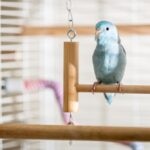
4. Bourke’s Parakeet

The Bourke’s parakeet is a beautiful, sweet, and relatively quiet parrot that comes from Australia. They’re bigger than a parakeet, but still small at around 7½ inches long. Life expectancy is up to 15 years, so you need to plan on taking care of a Bourke’s parakeet if your child goes to college.
Daily feeding, water changes and bird cage cleaning are a necessary part of their care. Be sure to bathe this pet bird daily and make sure to give it fresh vegetables. Ideally, you should adopt one that is hand-tamed as they can be flighty.
This type of parakeet needs a wider cage so it can move around, plus some daily interaction time, but probably not a lot of heavy one-on-one time with your child.
5. Peach-Faced Lovebird

The peach-faced or rosy-faced lovebird is one of nine breeds of lovebirds, and they’re one of the larger members of the lovebird family, though still small at about 6½ inches. They have a life expectancy of 20 years and come in many different color variations.
These lovebirds can learn some tricks and their noise level is lower than the larger parrots. However, they can be a little more of a challenging small parrot because they are energetic and can get themselves in trouble—so you’ll need to pay close attention.
They can become a little territorial, so you and your child will need to read up a little to know how to deal with these little cuties.
They need daily feeding, water changing, cage cleaning, plus some good one-on-one time. They should have a play gym, lots of toys, and bird perches.
6. Cockatiel

The cockatiel makes a great pet bird for kids, but be sure to adopt a hand-tame cockatiel for your child. Otherwise they have to be tamed, and not every child will have the patience for that. Cockatiels also frighten easily, so an older child may be a better fit for these parrots.
There are 12 types of ‘tiels and these can live up to 30 years. The male cockatiel is more vocal, while a female is typically more docile and cuddly. However, female cockatiels are also prone to laying eggs.
They have long tails, which make up a good portion of their 13 inches. Cockatiels need a roomy cage, plenty of toys and perches. New pet parents should help their child get familiar with the quirks of these natives of Australia.
In terms of daily care, a cockatiel will of course need feeding, water changing, cage cleaning, plus some good one-on-one time. Cockatiels can be dusty and should get a good misting spray bath about once a week.
7. Pacific Parrotlet

These spunky small parrots are also best for an older child. They are small, only about 5 inches, but parrotlets have a fearless personality, so any pet parent needs to pay attention. Parrotlets can be aggressive and curious, and they like to eat a lot.
Parrotlets need daily feeding, water changing, cage cleaning, plus some good one-on-one time. They need lots of space in their cage, a play gym and lots of toys and perches.
Parrotlets are a little more expensive as they are not as readily available as some of the others pet birds on this list, and they can live up to 20 years.
8. Diamond Dove

The diamond dove is a smaller dove at 7½ inches. They are pretty and easy going. While they can be tamed, they also enjoy the company of other doves.
Diamond doves don’t require as much one-on-one time as some other parrots, but they need plenty of space and probably another dove to keep them company
Be sure to provide lots of perches as well as high, flat surfaces for your diamond dove to roost on. Their life expectancy is 12 to 15 years.
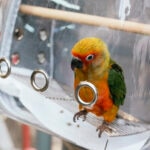
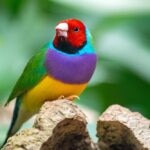
9. Goldie’s Lorikeet

These lorikeets (lories) are curious and chatty, but have a lower noise level than bigger parrots. They generally have a calm demeanor and are less high maintenance than other lories.
This small lory is only about 7 ½ inches, but they need a spacious cage with several perches. Goldie’s lorikeets have a life expectancy of about 7 years.
A Goldie’s lorikeet needs nectar in their diet, so you and your child who’ll caring for one should read up on their dietary requirements before bringing one home.
Goldie’s lorikeets are a little more costly and challenging to find.
Featured Image: iStock.com/akrp
FAQs About Pet Birds for Kids
What is the best pet bird for a child?
The best pet bird for a child depends on your their age, maturity, and interest in interacting with a pet on a daily basis. Pet birds require a time commitment, but canaries and society finches are good options for families looking for a pet bird that requires less hands-on interaction.
What is the best age for a child to have a pet bird?
Children around 12 and older may be better prepared to care for a pet bird independently, but parents should assess each child’s maturity and be prepared to oversee the bird’s care to ensure their well-being.
What is the easiest bird to take care of for kids?
It depends on the child’s age. Canaries and society finches are generally good choices for families looking for birds that need less daily interaction, although they still require daily feeding, fresh water, a clean cage, and appropriate veterinary care.
Are parakeets good pets for kids?
Parakeets can make wonderful companions for older children. These small parrots need daily one-on-one time and gentle handling, and older children may be better able to commit to their daily care routine (with adult supervision) and handle them outside the cage.
Can kids take care of a pet bird on their own?
Children shouldn’t be expected to manage all aspects of bird care alone. Parents still need to ensure the bird receives proper nutrition, daily feedings, fresh water, a clean cage, adequate enrichment, and veterinary care.
How much time does a pet bird need each day?
Daily care varies by species, but all pet birds need regular feeding, fresh water, cage cleaning, and stimulation, while some species may also need substantial daily social time outside their cages with their human family members.
How long do pet birds live?
A pet bird’s lifespan varies by species, ranging from around seven years for some smaller birds to 20–30 years for larger ones, so families should plan to care for a pet bird beyond their child’s school years.
What should parents consider before getting a pet bird for their child?
Parents should consider the bird’s temperament, noise level, lifespan, habitat and dietary needs, veterinary costs, and the family’s ability to provide consistent care if the child loses interest or leaves home.
Can kids handle larger pet parrots or other large birds?
There are many great stories of responsible children keeping larger parrots. It’s important to keep in mind that larger parrots have longer life expectancies, so a child would have to keep their bird into their adulthood. Adopting a larger pet bird means making a longer-term commitment to a pet.
Attributions